
Guests need somewhere comfortable to sit, a usable bathroom and a clear route through the home. They are unlikely to inspect the tops of your kitchen cupboards. Cleaning before guests works best when you separate those immediate needs from jobs that can wait. The aim is a home that functions well during the visit, not an improvised deep clean squeezed into the hours beforehand.
Take two minutes to picture the visit. Are friends coming for a meal, relatives staying overnight or neighbours dropping in for a drink? The answers change which rooms matter. A dinner needs safe food preparation space and enough clean crockery. An overnight stay adds bedding, a place for a bag and basic bathroom supplies. A short visit may require only the entrance, sitting room and loo. Decide that scope before you pick up a cloth.
Choose the rooms guests will actually use
Walk from the front door to the places a visitor is likely to enter. Look for coats or shoes that block the passage, furniture that makes movement awkward and objects that need a temporary home. Clear the route first. You can put personal items in their proper places or gather them in a container to sort later, but avoid creating an unstable pile behind a door that may need to open.
The sitting area comes next. Make enough seats available, remove cups and plates, and wipe a table if drinks or food will be placed there. Cushions can be straightened once the surfaces are clear. If a room has a persistent odour, identify the source rather than trying to cover it with fragrance. Empty the bin, deal with stale food, and allow fresh air in where practical. Strongly scented sprays may bother guests and rarely solve the underlying problem.
Close doors to rooms that are genuinely outside the visit. This is a reasonable way to limit the job, provided those rooms do not contain food waste or another issue that needs prompt attention. A guest who is staying overnight, however, will need clear access to the sleeping space and somewhere to put essentials. Do not promise a room is ready until you have checked the bed, light, plug socket and route to the bathroom.
Make the bathroom usable before polishing details
The guest bathroom or main loo deserves early attention because visitors cannot simply avoid it. Check that the toilet flushes, there is paper, the hand basin drains and a clean towel is available. Clear personal products from the basin edge so a guest can use it. Empty a full bin and wipe the obvious contact points: tap, basin, toilet seat, flush control and door handle. A mirror clean is useful, but it comes after the facilities work.
If several people will visit, inspect the room again shortly before they arrive. A newly cleaned bathroom can quickly lose its ready appearance if the household continues using it. Keep a spare roll of paper accessible rather than hidden in a cupboard a guest would not know to open. For an overnight guest, make space for their toiletries and explain any awkward shower control or unreliable door latch.
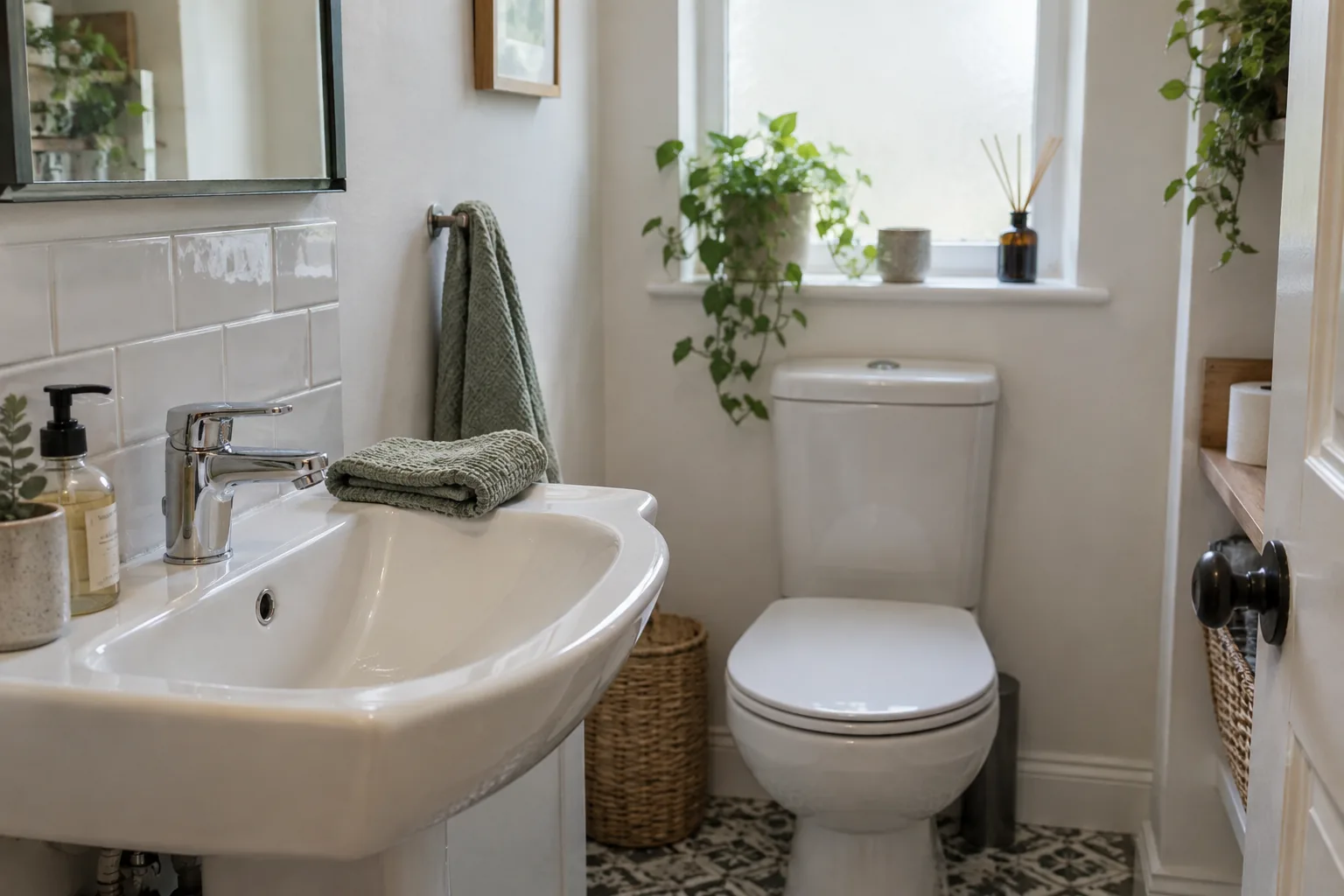
Avoid an experimental treatment for stubborn marks just before the visit. Limescale and older staining may need a product suitable for the material and enough contact time; scrubbing a delicate finish in a hurry can leave damage. If a mark will not safely shift with your normal method, clean the surrounding area and plan a separate job later.
Treat the kitchen according to the visit
If you are serving food, start by clearing and cleaning the preparation area. Move dishes into the dishwasher or wash them, then clean the sink and the sections of worktop you will use. Wipe obvious spills on cupboard handles and the hob. Check the fridge for anything that has leaked or smells off, particularly if guests will be offered drinks from it. Wash the mugs, glasses and plates you actually need rather than emptying every cupboard.
Food safety matters more than an immaculate cabinet front. Keep raw food preparation separate from ready-to-eat food, use clean equipment and follow the normal hygiene advice for the ingredients you are handling. Do not spray cleaning products near uncovered food. Give treated surfaces the rinse or drying time specified by the product label before preparing a meal there.
For a drinks-only visit, the kitchen may need much less work. A clear counter, clean glasses, a working kettle or coffee maker and a bin with room in it will do more for the visit than organising a pantry. If guests will not enter the kitchen, focus on the route between it and the serving area rather than cleaning concealed spaces.
Work backwards from arrival time
Leave the last half-hour for tasks that have to stay fresh: putting food out, a final bathroom check and opening the door without a mop bucket in the hall. Wet floors and freshly treated furniture need time to dry before people walk or sit on them. If a surface will not dry in time, choose another task. This is especially relevant if you are considering carpet cleaning and its drying time; an imminent gathering is rarely the moment for a large wet-cleaning job.
Before that final period, divide the available time among the guest route, bathroom and hospitality area. A workable order is to collect rubbish and dishes, clear possessions, clean the high-use surfaces, vacuum or sweep exposed floor, then add the small details. The site’s guide to what order to clean a room in is helpful if you keep losing time by returning to the same area.
Set a stopping point. An hour spent on one hard-water mark can consume the time needed to prepare seating and towels. If a task is taking longer than expected, ask whether it affects the guest’s experience or safety. If not, write it down for another day and move on. A short list of three essentials beats a long list that leaves the entrance blocked at arrival time.
Plan differently when someone stays overnight
An overnight visitor needs more than a presentable sitting room. Put clean bedding on the bed and check that it is dry. Provide a towel and a place to hang or leave it. Clear a portion of the floor and at least one useful surface for a phone, glasses or bag. Make sure the room can be darkened or explain if it cannot. None of this requires a perfectly arranged wardrobe.
Think about the household’s routine, too. If the bathroom is shared, let the guest know where spare paper and toiletries are. If there are pets, explain where they sleep and whether doors should remain closed. Put fragile or private items away in advance rather than asking a cleaner or guest to decide how to handle them. The article on preparing a cluttered room for a cleaner covers the same access principle when outside help is involved.
If a sofa bed is involved, open it before the guest arrives. This reveals whether the mechanism works, whether bedding fits and whether furniture needs to move. It is a small task that can become awkward when attempted late at night with bags and people in the room.
Decide what can wait for another day
Inside cupboards, skirting behind heavy furniture, upper cabinet grease and long-standing bathroom deposits are separate jobs. They may deserve attention, but they need proper time, access and sometimes a material-specific method. Trying to combine them with a guest-ready reset increases the chance of leaving a room half-finished. Write the jobs on a later list; do not let them distract from the space visitors will use.
The same applies to a full carpet or upholstery treatment. Consider whether drying, ventilation and restricted room use fit the event. If they do not, remove surface debris and address fresh spills with care, then arrange a suitable appointment afterwards. Prompt attention to a spill means blotting and assessing the material, not applying an untested cleaner indiscriminately.
If you have more work than the available time allows, a one-off cleaning visit can help with a defined set of rooms and tasks. Describe the arrival time, the rooms guests will use, the condition of the bathroom and kitchen, and anything that must remain untouched. Ask what can realistically be finished and dry before the visit. A clear brief makes the appointment useful; a request to “do everything” gives nobody a sensible order of work.
Once the essentials are done, stop cleaning and prepare to welcome people. A clear seat, clean facilities and an unhurried host will matter more than a surface nobody was going to see.