Practical cleaning advice
How to Prepare a Cluttered Room for a Cleaner Without Pre-Cleaning It
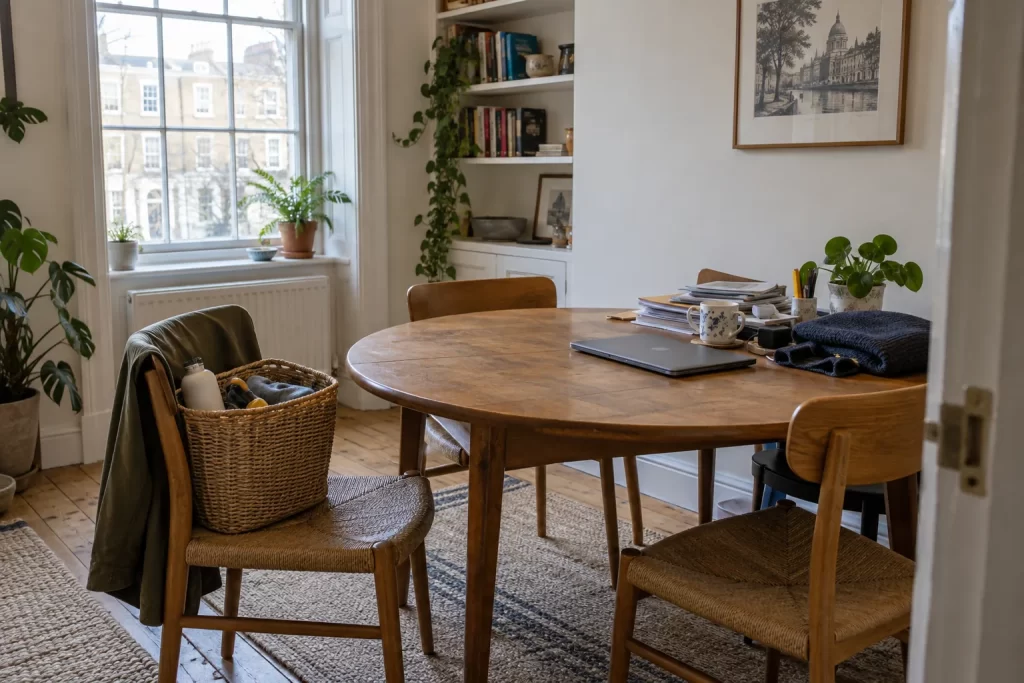
You do not need to clean a room before a cleaner arrives. You do need to decide what they should be able to reach, which belongings are private and what must stay where it is. In a cluttered room, those decisions matter more than making it look presentable.
Begin with one question: which surfaces are part of the agreed job? If the answer is the desk, floor and window ledge, concentrate on access to those. Sorting the wardrobe can wait.
Put things into three groups, not one enormous pile
A quick sweep into a bin bag may clear the floor, but it also hides everything you will need afterwards. Use separate places for items you want to protect, items you can move and items that should be left alone. These can be existing drawers, a basket or a clear section of another room; you do not have to buy storage.
- Put away yourself
-
Private papers, medicines, jewellery, cash and small valuables belong somewhere you choose. Keep a work laptop and its loose accessories together. A cleaner should not need to decide whether a receipt is rubbish or whether an envelope can be opened.
- Move to make the job possible
-
Clothes on the floor, mugs on the desk and bottles covering a sill can prevent access to the surface underneath. Put them somewhere that will not block the next part of the job. Keep the doorway and the route across the room available.
- Leave in place and explain
-
A heavy bookcase, a fragile display or a tangle of connected equipment may be better left untouched. Tell the cleaner which area to work around. If access behind it is essential, discuss how that will happen before the appointment rather than moving it in a hurry.
A small-room example
Imagine a spare bedroom that doubles as an office. Laundry covers part of the floor, the desk holds a monitor and paperwork, and storage boxes sit beneath the window. You want the reachable furniture dusted and the floor cleaned.
First, put the laundry in its usual basket and move it outside the work area. Put the paperwork into a folder or drawer you can find again. Leave the monitor connected if moving it would be awkward, and explain that the cables and equipment should not be touched.
Then decide about the boxes. If you can safely move them to a place outside the agreed cleaning area, do that. If not, explain that the cleaner should work around them. Do not describe the floor as fully accessible when half remains covered.
The room still looks lived in, but the cleaner can reach the areas you have agreed.
When there is nowhere else to put things
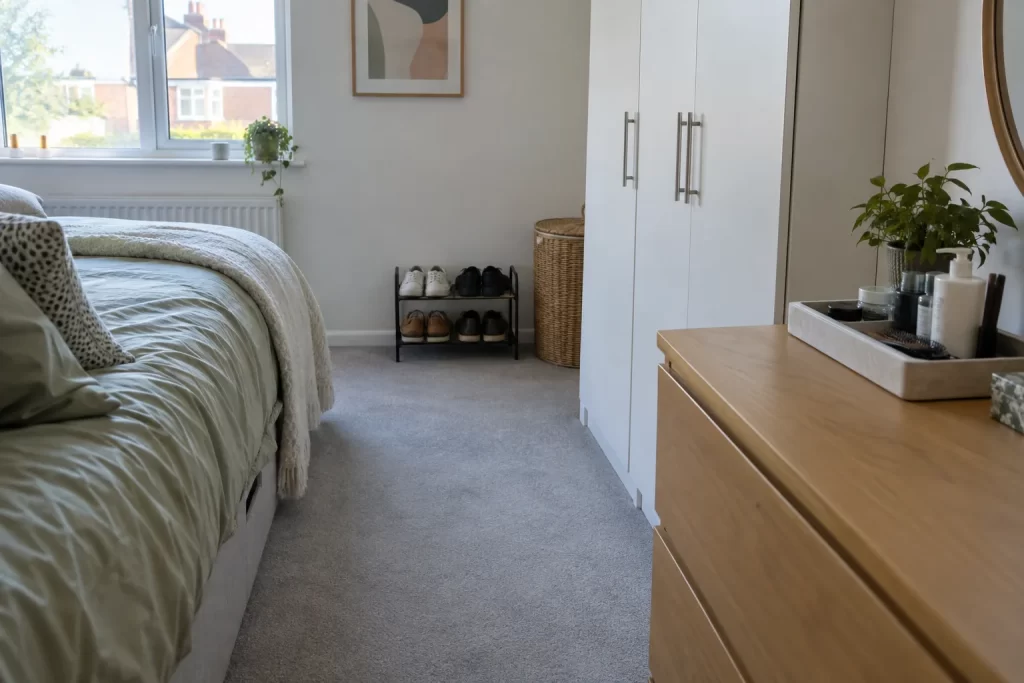
In a flat without a spare room, clearing one surface often covers another. Choose a temporary holding place outside the first priority area and tell the cleaner about it. A table full of belongings can remain out of scope while the accessible floor and other furniture receive attention.
Do not pile everything onto the bed if bedding or the mattress is part of the visit. Equally, putting loose items on the sofa makes little sense if that is the furniture you most want cleaned. Decide which task matters more this time.
You can also ask whether the visit can work in sections, but check the practical arrangement in advance. Repeatedly moving the same boxes around a cleaner is likely to interrupt the work. A smaller clear area may be a better choice than an ambitious whole-room instruction.
If you cannot move an item safely or comfortably, say so. “Please leave the boxes in place and clean the accessible area” is a complete instruction. It is not an apology.
Write a brief that fits on a small note
Give the cleaner priorities and boundaries. For the bedroom above, a brief could read:
Bedroom: floor and reachable shelves first. Paperwork is in the top drawer; leave it closed. Please work around the desk equipment and the boxes by the window. Leave the tall cabinet and everything on top untouched. If time remains, dust the bedside table.
Adapt it to the agreed service. Do not use a note on arrival to add an oven interior, carpet treatment or several extra rooms that were never part of the quote. If the job has changed since booking, contact the team beforehand. When comparing offers for the revised job, compare the tasks and payable totals against the same brief.
For a single cleaning visit, mention any deadline and rank the rooms that need attention. For a regular domestic arrangement, agree where everyday belongings can be left each time. A repeatable place for them is more useful than a different emergency pile every week.
Stop preparing at the right point
You have done enough when the agreed surfaces are reachable, private items are put away and the limits are clear. There is no need to wipe those surfaces simply to make them seem less dirty before someone arrives to clean them.
Take one last look from the door. Can it open properly? Is there a usable route? Is your phone buried in the basket you are about to move? Check those ordinary details, then leave the cleaning to the appointment.
Afterwards, return belongings to the places you need them. Notice which surface immediately disappears under clutter again. That may be the one small storage decision worth changing before the next visit.