Practical cleaning advice
What Order Should You Clean a Room In?

For an ordinary room clean, use this order: clear the surfaces you need to reach, deal with reachable higher areas, clean furniture and lower surfaces, then finish the floor. Move around the room once rather than following whichever mark catches your eye.
A fresh spill or broken glass takes priority. For everything else, the sequence helps you finish without carrying dust and crumbs back over an area you have already cleaned.
Choose the finish before you start
Look at the room from the doorway. What needs to be different when you leave it? A sitting room might need crumbs removed, a clear coffee table and a clean floor. A bedroom may need fresh bedding and dust removed from the furniture. Decide on those jobs before opening a cupboard and finding an afternoon’s sorting to do.
Keep organisation separate. A pile of papers needs a decision about where it belongs; a dusty shelf needs access and cleaning. Trying to solve both throughout the room makes it hard to finish either. Put items that belong elsewhere into one basket, but keep private documents, fragile objects and valuables somewhere appropriate rather than mixing them into a general pile.
You do not need a perfectly tidy home to start. Clear one workable area at a time. In a small flat, the dining table may also be the desk, so you might clean half, let it dry if necessary, and move things across before doing the other half. For a booked visit, use the same principle to make a cluttered room accessible without pre-cleaning it.
Make one route through the room
Start beside the door and choose a direction. Clockwise or anticlockwise makes no difference; sticking to one helps you remember what you have done. Gather the equipment you actually need before beginning, including enough clean cloths to change them during the job.
Work within safe reach. The top of a tall wardrobe does not become a sensible weekly task merely because it is above the coffee table. Leave anything that requires unsafe climbing, awkward stretching or moving furniture you cannot handle comfortably.
1. Deal with the higher dust first
Begin with accessible upper shelves and other suitable surfaces above the furniture. Use the method recommended for each finish. A painted surface, untreated wood and a fabric shade should not automatically receive the same damp cloth.
Dust disturbed above can land below. Dyson’s room-cleaning guidance also puts higher areas before floors and deals with living-room furniture before the final floor pass.
If changing bedding is part of today’s job, do it before the final clean of the surrounding surfaces and floor. Carry used linen to the laundry rather than leaving it on a chair that you will shortly need to clear again. While the bed is uncovered, fit in the mattress checks allowed by its care instructions before remaking it.
2. Work through furniture and the things on it
At each shelf or table, lift a few objects, clean the available surface and deal with the objects according to their care needs before replacing them. Avoid moving a dusty ornament straight onto the section you have just finished.
Clean the furniture in your chosen direction instead of wandering between rooms with every misplaced item. Take the basket out at the end. For a sofa, remove small objects from under loose cushions and follow the upholstery instructions for routine care; treating a stain is a separate task from picking up crumbs. If you are considering removing the covers, check whether those sofa covers can be washed before unzipping them.
Complete any finishing steps before moving on. If a product’s instructions require a rinse or a particular application time, allow for that in the sequence. A quick wipe followed immediately by another product is not a substitute for following the label.
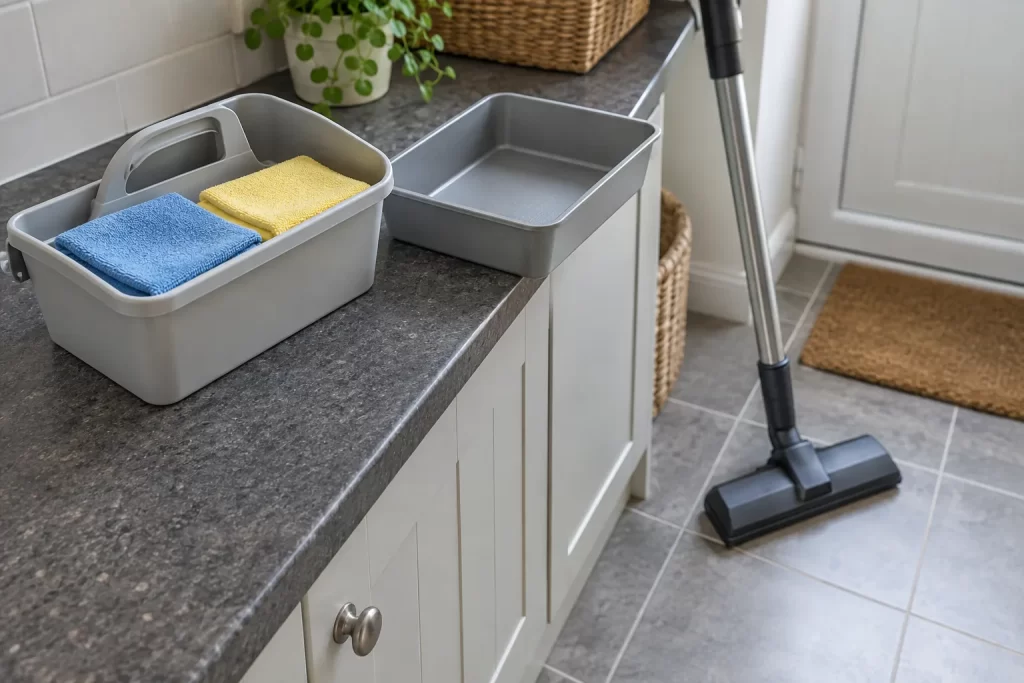
3. Finish the lower details
Next, look at reachable furniture legs, lower shelves and skirting. These are easy to miss if you rush straight from the table to the vacuum. Move light objects only when there is somewhere sensible to put them; leave heavy pieces in place unless you have a safe plan.
At this stage, separate unfinished cleaning from maintenance. A loose strip of skirting, peeling paint or a damaged surface is not a reason to scrub harder. Make a note and continue with the areas that can be cleaned normally.
4. Leave the main floor pass until last
Remove loose debris with equipment suitable for the flooring, including accessible edges. For a hard floor that permits damp cleaning, follow with its approved method. Bona’s Cleaner instructions, for example, put removal of loose dust and grit before cleaning with the diluted product. Check that any cleaner you choose is suitable for your particular floor.
Plan your exit before damp cleaning. Start at the farthest part and work towards the doorway so you do not have to walk back across it for your phone or the cloth basket. Keep the route clear and follow the flooring and product guidance before using the area again.
When the order needs to change
A fresh spill takes priority over the planned circuit. Follow the affected item’s care guidance and avoid spreading the problem while you fetch supplies. Similarly, remove something sharp or otherwise immediately hazardous before carrying on with ordinary cleaning.
A very gritty entrance may need a quick initial debris removal so you are not carrying dirt through the room. That first pass is preparation. The final floor clean still comes after the upper work.
Do not use this routine as a shortcut for building dust, an unknown chemical spill or a damp problem. Those need a different assessment. Nor does a better sequence make every old mark removable: kitchen build-up and fragile finishes may need more detailed attention than today’s routine allows.
Before you put the equipment away
Take the basket of misplaced items to where they belong, put away the equipment and check your original list. In the sitting room, that might mean a clear table, crumb-free sofa and finished floor. Leave the cupboard sorting for the time you set aside for it.
If the same everyday work keeps being postponed, an agreed domestic cleaning routine can take those recurring rooms off your list. If the obstacle is accumulated residue in particular areas, discuss those details as part of a deeper clean. In either case, describe the jobs you want finished; a room count alone does not explain them.