
The morning after a gathering, the whole home may look as though it needs cleaning at once. It does not. Food that can spoil, fresh spills, broken glass and blocked walkways deserve attention first. Dusting, polishing and arranging cushions can wait until the obvious hazards and time-sensitive marks have been dealt with. This order keeps a short clean-up from turning into a long, unfocused attempt to reset every room.
Before starting, open a window if practical and take a quick look through the rooms guests used. Note any wet patches, food left out, waste near heat sources or small objects underfoot. If you are tired, keep the first pass simple. The aim is to make the home safe and prevent avoidable deterioration; you can do the routine cleaning after a break.
Make a safe route through the rooms
Collect broken glass, sharp bottle caps and anything that could be stepped on. Wear suitable footwear and gloves if you need to handle shards. Use a brush and dustpan rather than your fingers, and inspect the surrounding floor carefully. Put sharp waste in a rigid container before disposal, following the local collection rules. A quick vacuum alone may miss larger pieces and can damage the machine.
Next, clear plates and glasses from the floor and steps. Move bags, loose cables and furniture that obstructs the route to the kitchen and bathroom. You do not have to put every item away immediately; grouping dishes and rubbish safely makes the cleaning tasks possible. If a floor is sticky, place a temporary warning or keep people and pets away until you can clean and dry it properly.
Check for candles, smoking materials or heat-producing equipment that may have been left out. Make sure everything is extinguished and cool before handling it. Avoid covering an electrical appliance with a cloth or placing wet cleaning materials near plugs. These checks take little time and matter more than making the room look presentable.
Remove food waste before it becomes a bigger job
Put perishable food away promptly if it has been stored safely, or discard it if it has been left out too long. Do not make safety decisions based on smell alone. Follow current food-safety guidance for the food in question, especially items containing meat, dairy or cooked rice. Empty food scraps from plates and gather used serving utensils. A sink full of dishes may be inconvenient, but loose food around the room can attract pests and create odours.
Separate recycling only after checking for broken or contaminated items. Pour away leftover drinks carefully, keeping liquid away from sockets and floor edges. Wipe the surfaces where food sat, then leave dishes to wash when you can do the job properly. If the bin is full, tie the bag and move it to its normal storage place. Putting a new liner in straight away gives the rest of the clean-up somewhere to go.
In the kitchen, check the hob and oven are off, then look for splashes on worktops and cabinet fronts. Clean food-preparation surfaces with a method appropriate to their finish and the product label. If raw food was prepared during the gathering, give those areas particular attention. Do not use an aggressive cleaner on a material you have not identified merely because the surface looks stained.
Treat a fresh spill according to the material
A fresh spill is easier to assess before people walk through it or place objects on top of it. On a hard surface, remove the bulk of the liquid with an absorbent cloth, then clean with a product suitable for that finish. On carpet or upholstery, blot without rubbing and check the material care guidance before adding moisture or a cleaning agent. Overwetting can carry a mark deeper into the backing or padding, while strong products may alter colour or finish.
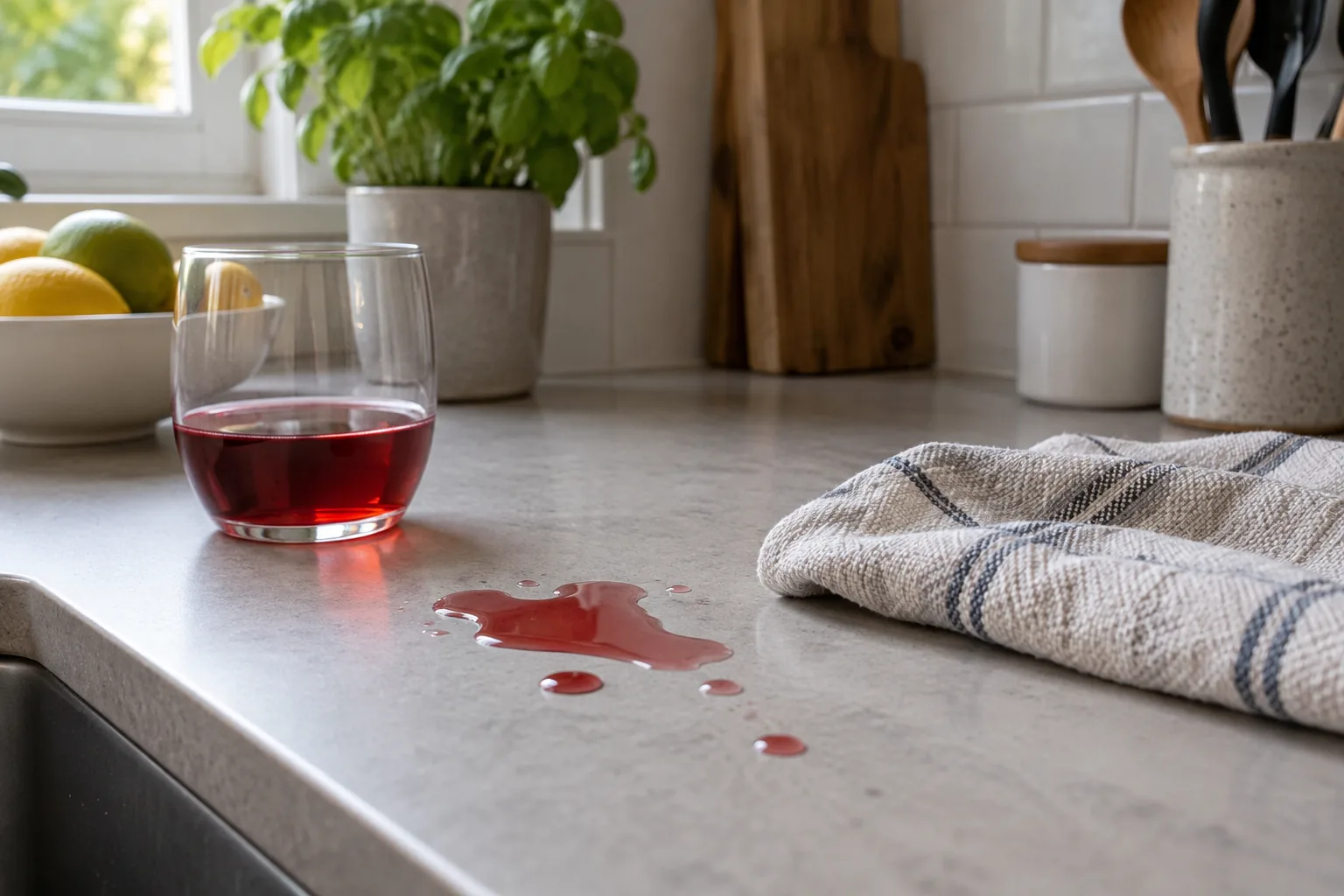
Take a photograph of a significant mark before treatment if you may need professional advice later. Note what was spilled, roughly when it happened and anything already applied. Do not keep repeating a treatment that has no effect. The existing article on why a carpet stain can come back explains why the visible surface is not always the only affected layer. A sofa or rug may have a different construction, so the same method should not be assumed safe across all fabrics.
If a spill has reached an electrical item, unplug it only if that can be done safely without touching liquid or damaged wiring. Keep the area clear and seek appropriate help. Cleaning advice is no substitute for electrical safety. Where a material is delicate or unknown, contain the spill and ask a specialist before attempting a stronger treatment.
Reset the bathroom while it is still straightforward
The bathroom used by guests is a practical early task. Remove rubbish, replace the bin liner, check toilet paper and clean the basin, tap, toilet and obvious contact points. Look for water on the floor or a blocked drain rather than focusing only on the mirror. If several guests used the same hand towel, put it in the wash and provide a fresh one. Allow cleaned surfaces and floors to dry before the household resumes normal use.
Avoid mixing products in an attempt to work faster. Bleach, acidic descalers and other household cleaners can react dangerously. Follow the labels, ventilate as directed and use one appropriate method at a time. Older limescale is not an emergency left by the party; schedule it separately instead of spending the first hour scrubbing a tap while wet food waste remains elsewhere.
If the gathering included overnight guests, strip any used bedding once they have left and check whether it is washable under the care label. A load of laundry can run while you tackle the sitting room, but do not leave damp fabrics piled for the day. If the guest room was barely used, it may need only a quick check rather than a full clean.
Return to the room by task, not by object
Once the urgent work is under control, take one pass to collect rubbish, a second for dishes and glasses, then a third for belongings. This is often quicker than picking up one item, walking it across the flat and discovering another item on the return trip. Put chairs back only after checking the floor beneath them. Empty bottles and cups may conceal small spills or rings on tables.
Dust or wipe reachable surfaces as needed, then clean the exposed floor. Vacuum dry debris before using a damp method on a suitable hard floor. Sweeping wet crumbs across a room makes more mess. For an orderly approach to each space, the site’s article on what order to clean a room in gives a practical sequence. After a party, however, the safety and food-waste pass still comes first.
Give high-contact surfaces such as handles, switches and shared tables a sensible clean without assuming that every wall or shelf needs treatment. If the home is occupied and the kitchen must be used again soon, prioritise a clean preparation area and clear route. Decorative details can wait until meals and ordinary routines are working again.
Decide whether a one-off appointment would help
A small gathering may leave only an hour or two of work. A larger one can create a backlog that the household cannot manage in the time available. If you want outside help, make a list after the urgent hazards and fresh spills have been addressed. Name the rooms used, the current condition, any known stains and the tasks you want completed. A one-off cleaning visit can then be discussed against a real scope rather than a vague request to “clean after the party”.
Tell the provider about delicate surfaces, access and whether furniture needs moving. Ask which work fits the appointment and whether carpet or upholstery treatment is a separate service. A general clean may handle dishes, accessible surfaces and floors, but it should not be assumed to include specialised stain removal. If you are comparing providers, the guide to why cleaning quotes for the same flat can differ helps you check that the requested tasks are actually comparable.
Keep a short final list for the following day: laundry to put away, a bin to collect, an old mark to assess or borrowed glasses to return. The clean-up is finished when the home is safe and usable again. It does not need to become a complete inspection of every cupboard simply because people visited.