Practical cleaning advice
Why Does a Carpet Stain Come Back After Cleaning?
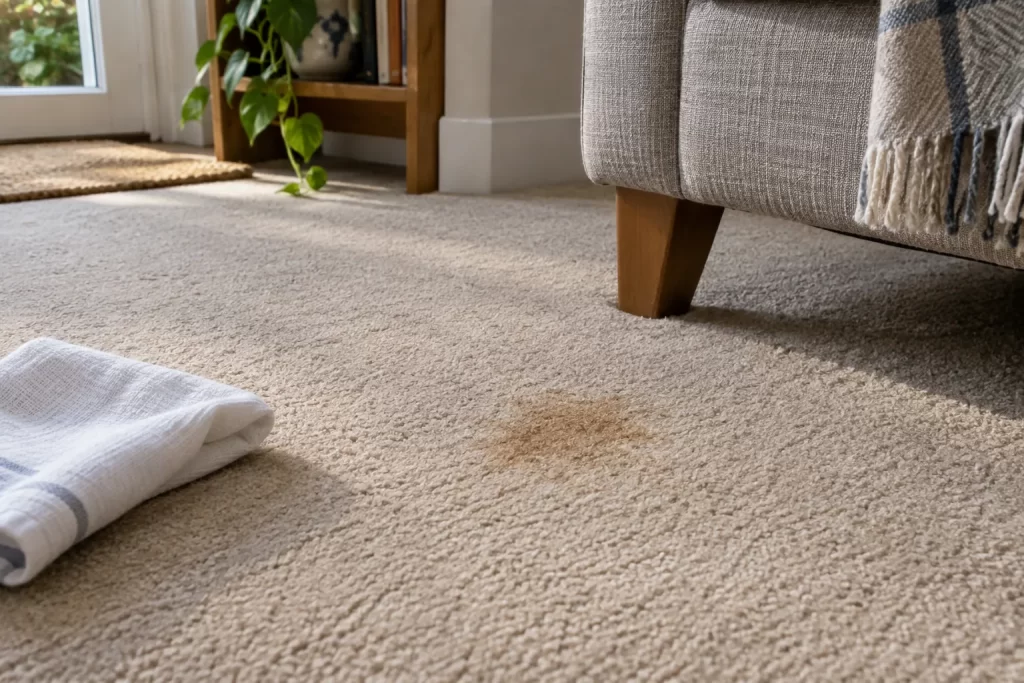
A mark that returns after cleaning is not always the original stain coming back. Moisture can carry material from deeper in the carpet towards the surface as it dries. Residue can also make a cleaned patch collect dirt again. And some apparent marks are changes in the carpet’s appearance rather than removable soil.
The first useful clue is when you noticed the change. Did the patch return during drying, after the room had been used again, or only when you looked from the other end of the room? Write that down before trying another product.
It returned as the carpet dried
This can be wicking: liquid moves upwards through the fibres during drying, carrying dissolved material with it. A spill may have reached farther into the carpet than its visible surface mark suggests.
Cleaning-equipment manufacturer Mytee explains how wet cleaning can reactivate material deeper in a carpet, allowing it to appear at the surface again.
Picture an old coffee spill beside a chair. The top looks better after treatment, then a similar mark becomes visible during drying. Tell the cleaner about the spill and the timing. Avoid assuming that the answer is simply more liquid poured onto the same area.
If the cleaning was carried out professionally, contact the company before attempting your own follow-up. Describe what has changed and ask how they want you to proceed. A new treatment can make it harder to assess the result of the first one.
It looked fine, then became dirty again
A patch that gradually darkens after use raises a different question: was something left behind that is collecting new soil? It may be residue from the spill or from an earlier cleaning product.
Shaw’s spot-cleaning guidance warns that remaining detergent can lead to rapid re-soiling.
Think about the history. Was the spot sprayed several times? Was a household product used before the machine clean? Did the treated area remain different from the surrounding pile? Give the cleaner that information, including the product name if you still have it.
Also check the ordinary explanation: is something happening in the same place again? A chair where drinks are regularly put down or a route from the back door may receive repeated spills or dirt. Note the pattern without treating it as proof of either residue or wicking.
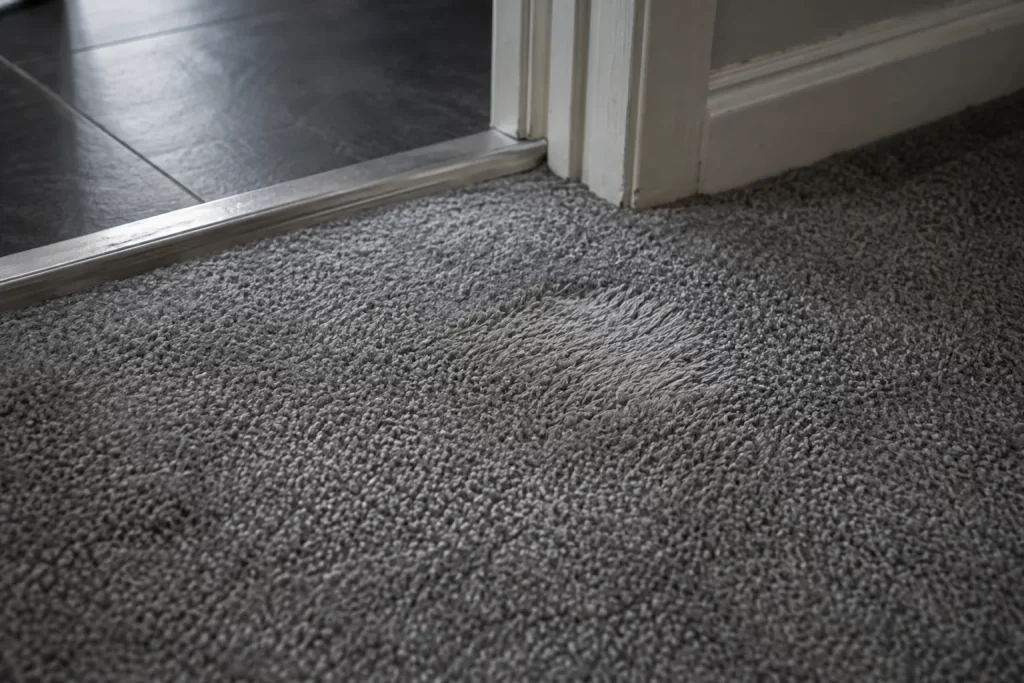
Check whether the mark changes with your viewpoint
Look from both ends of the room in similar light. Some patches appear dark from one direction and pale from another. The Carpet and Rug Institute’s care guide distinguishes changes in pile direction, known as shading or pile reversal, from a change in colour. It also describes matting and crushing as appearance issues.
Tell the cleaner if the patch changes with your viewing direction. That observation helps distinguish an appearance issue from a spill that has left material in the carpet.
Likewise, a pale patch should not automatically be treated as dirt. Tell the assessor if it was present before cleaning, if it followed a product application or if the fibres feel or look damaged.
Use a short observation record
Several causes can look similar. Use these observations to brief the cleaner; a photograph or drying pattern alone cannot confirm the cause.
| What you notice | What to record |
|---|---|
| The same patch returns during drying | Where the original spill was, what it contained and when the mark became visible again |
| The area darkens after normal use | Products previously applied and how the room has been used since cleaning |
| The patch changes with the viewing angle | Two photographs from opposite sides in the same lighting |
| A new outline or larger affected area appears | A wider photograph, approximate dimensions and whether the outline is still changing |
| The area remains unexpectedly damp or has an ongoing moisture source | Where the moisture could be coming from and the drying advice already given |
Take a close photograph and one showing where the patch sits in the room. Use ordinary daylight where possible. The wider image may show that the mark follows a doorway, furniture position or frequently used route; the close one records the edge and texture.
Why another round of scrubbing can complicate things
Repeatedly changing products makes the treatment history harder to untangle. Stop experimenting if the first attempt has failed or the appearance is changing in a way you did not expect.
The Carpet and Rug Institute cautions that excessive wetting can damage carpet construction, while scrubbing can distort the pile. Follow the carpet maker’s instructions rather than treating stronger solution, extra water or harder rubbing as automatic improvements.
Keep the product packaging and write down what you have already done. “A little carpet spray” is less useful than its name and an honest description of how it was applied. You do not need an exact measurement if you cannot remember it; say what you know.
Do not lift fitted carpet or remove underlay yourself just to inspect a mark. If the concern seems to involve moisture below the surface, explain that and ask who should assess it. A continuing leak needs attention to its source.
Ask for an assessment of the returning mark
When discussing professional carpet cleaning, distinguish a general room refresh from a patch that has already been treated and returned. Ask what can be assessed, what the possible limits are and what aftercare applies. If another treatment is agreed, plan access while the carpet dries before choosing the appointment time.
If the item is a loose rug, describe it as one. Its backing and construction may call for a separate rug-cleaning assessment, even if it lies on top of a fitted carpet. For a wool rug, check the blend, backing and proposed process before adding water.
Keep the photographs and product details until the area has dried and been reviewed. If the mark changes again, you will have a record of when and how it happened.