
The quickest way to lose a playroom is to put every toy into one large box so the floor can be cleaned. The floor becomes accessible, but the next play session starts with a search through a mixed pile. A better approach is to decide where a few categories of toys belong, clear the area that needs cleaning and leave the rest of the room recognisable to the people who use it.
Children’s spaces often share another purpose. A sitting room may hold a small train set at one end and family seating at the other. A bedroom may have a narrow route between the bed and the storage unit. The cleaning brief should explain which surfaces need attention and which arrangements should remain in place. A cleaner does not need to redesign the room in order to wipe a table or reach a floor.
Decide what the cleaning visit should cover
Start by identifying the work that belongs in the appointment. This may include accessible floor care, reachable shelves, the outside of storage units and a table used for crafts. Washing individual toys, sorting collections and choosing what to discard are different jobs. They require decisions about ownership, materials and sometimes hygiene instructions that are better made by a parent or carer.
Mark the areas where ordinary dust and crumbs collect: beneath a low table, at the edge of a play mat, near a toy shelf and along the route to the door. Then decide what can be lifted by the household before the appointment. A small basket for loose pieces is useful if its purpose is clear. Five unlabelled baskets simply move the sorting problem into storage.
If a child has built a model that must stay up, say so. Put it on a stable surface if possible, and include that surface in the “leave untouched” part of the brief. An unfinished puzzle, delicate display or group of figures may not survive being shifted to make cleaning faster. The broader guide to preparing a cluttered room for a cleaner explains how to make these boundaries visible without doing the cleaning yourself.
Give loose toys a home before clearing the floor
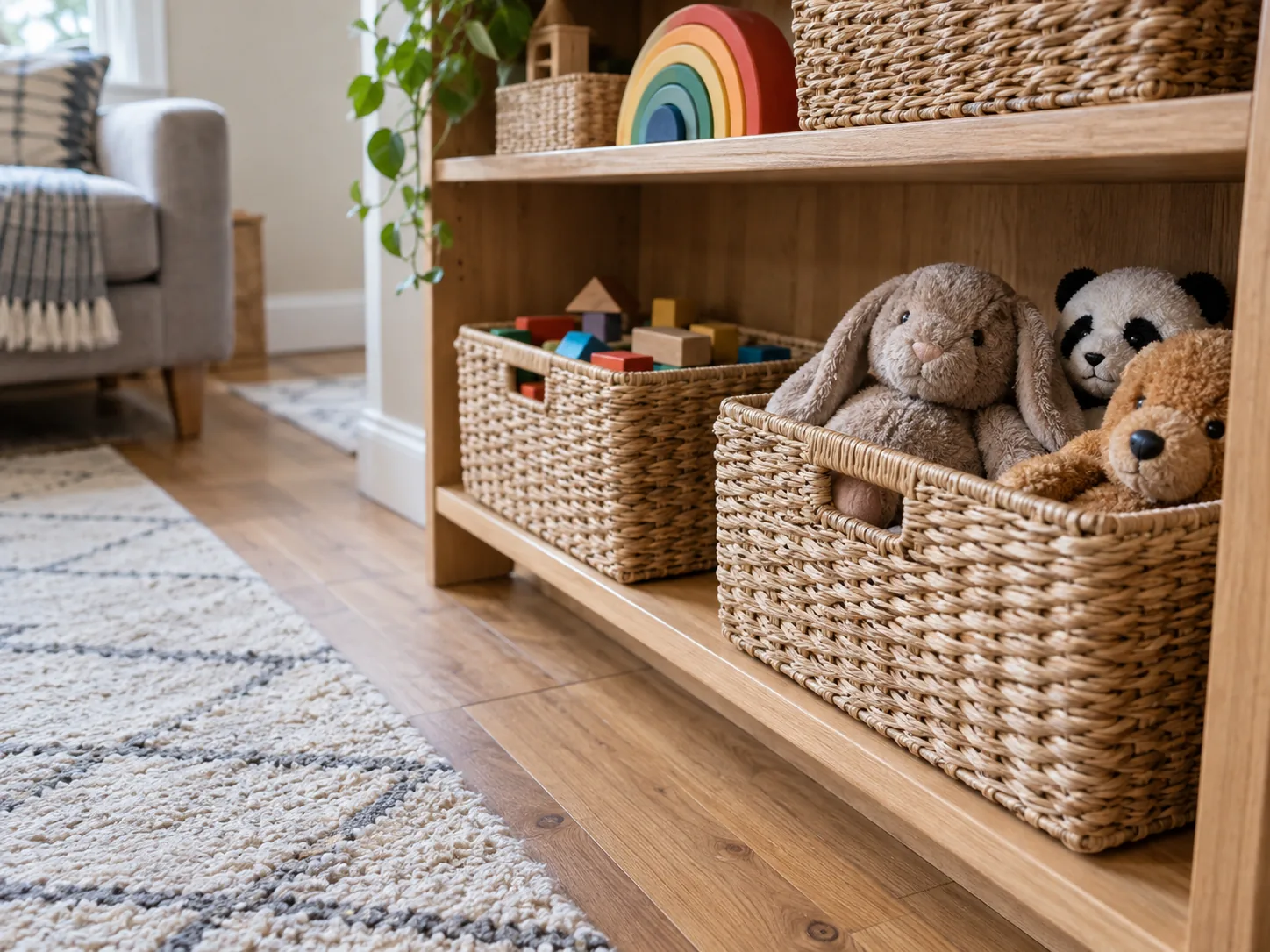
Storage works when it matches how toys are used. A shallow basket can hold a few soft toys; a lidded container may suit small construction pieces if an adult can identify its contents; books need a place where they will not be crushed under heavier items. You do not need a perfect labelling system. You need enough separation to put things away and find them again.
Walk the floor once before the visit. Gather small pieces that could be drawn into a vacuum or stepped on. If they belong to a specific set, keep them together rather than dropping them into a general “miscellaneous” container. Move larger toys from the route the cleaner needs. If an item is too heavy, awkward or wired to move safely, note it and ask the cleaner to work around it.
This is preparation, not a demand that the room look untouched by children. A few books on a shelf or a play kitchen against a wall do not prevent useful cleaning. The aim is to expose the surfaces in the agreed scope while protecting the organisation that makes the room workable the rest of the week.
Use a temporary place for current projects
Some toys are in active use for several days. A shallow tray or a marked section of a shelf can hold a partly built model while the table underneath is wiped. Agree with the child, where appropriate, what may be moved and what must stay assembled. If the project cannot be moved without breaking it, leave that part of the table outside the cleaning scope for the visit.
Take a quick photograph of a complicated arrangement if it helps you restore it later. The photograph is for the household’s own use; it does not make the cleaner responsible for rebuilding a layout. A cleaning appointment should not turn into a test of whether another person can remember exactly where every piece was.
Check what each surface can tolerate
A playroom can contain several materials within a few steps: painted wood, laminate, fabric baskets, foam mats, plastic toys and perhaps an unsealed craft table. A product that is appropriate for one surface may be wrong for another. Follow the maker’s care instructions where available and tell the cleaner about any known restrictions. If you are unsure of a finish, avoid asking for a strong treatment until it has been identified.
Do not ask a cleaner to spray products over toys in place. Move food items, craft materials and the toys that a child regularly puts in their mouth. A cloth used on a floor or bathroom should not be used on a child’s eating or play surface. The method and products for a particular task should be agreed with the cleaning provider, including any drying or rinsing instructions, rather than assumed from a generic checklist.
Play mats deserve their own decision. Some can be lifted so the floor beneath can be cleaned; others are fitted, fragile or difficult to dry if wetted. Identify the mat and the floor finish below it before deciding whether it should be moved. Leave enough time for both surfaces to be suitable for use again before children return to play.
Plan the order around the family’s day
The room is easier to clean when the children are using another space, but that is not always possible. If the family is home, agree which area will be unavailable and for how long. A sitting room can be cleaned in sections so that nobody has to step across a damp floor to reach the kitchen. Keep a safe route to a bathroom and the front door.
Clear the table and reachable surfaces before floor work. Dust and crumbs dislodged from shelves can then be removed from the floor. The article on what order to clean a room in describes the general sequence; in a play area, the extra step is protecting projects and small parts before anything is shifted.
If a child returns from school during the appointment, agree where their bag, shoes and snack will go. Otherwise the freshly cleared table may become a drop zone while it is still being cleaned. This small bit of timing often matters more than buying another storage product.
Keep the cleaning brief short
A useful instruction might say: “Please wipe the clear craft table and reachable shelving, clean the open floor and the route beside the sofa, and leave the model on the low shelf untouched. The foam mat can be lifted by us beforehand; the wooden toy chest stays in place.” That gives clear tasks and boundaries without asking the cleaner to guess which toys are valuable or where they belong.
If the room is part of a larger domestic cleaning visit, explain its priority relative to the kitchen, bathroom and other rooms. A play area that needs a careful pass may take longer than the same floor area in an empty room. Adjust the time or the list, rather than expecting both detailed sorting and full cleaning in a standard slot.
Keep the room usable between appointments
After the clean, notice which storage choices survived an ordinary week. If small pieces continually end up on the floor, the container may be too difficult to open or too far from the place where the toy is used. If a basket is always overflowing, it may hold too many unrelated items. Change one practical detail at a time.
Set a short household reset before the booked visit: put small parts with their sets, clear food and drinks, and expose the agreed floor area. Children can take part at a level suited to their age, but an adult should check for sharp pieces, fragile work and anything that should not be moved. The reset is a way to make the paid cleaning time useful, not a requirement to pre-clean the room.
Finally, allow for changing interests. A baby mat, a craft table and a collection of building sets create different access needs. Revisit the brief when the room changes, rather than letting an old checklist dictate work that no longer fits. The best result is a room that can be cleaned and then used again without a second round of sorting.