Practical cleaning advice
Staff Kitchen Rota or Professional Office Cleaning: Who Does What?

Dishes left after Tuesday’s lunch cannot wait until Thursday’s cleaning visit. By then, everyone else has had to work around them.
For a small office kitchen, the workable arrangement is usually a division of jobs: people deal with the mess they create, a named person checks shared tasks, and the cleaner completes the work agreed for each visit. The rota covers the gaps between appointments.
What each approach can actually do
A staff rota is useful for tasks that arise during the working day: clearing lunch things, unloading a finished dishwasher and noticing that supplies are running low. It can respond while the kitchen is being used. Its weakness is ownership. “Everyone” often means nobody knows whether a task is theirs today.
A professional visit provides an agreed block of work at an agreed time. It can cover accessible surfaces, floors and other specified tasks consistently. Its limit is the interval between visits. An evening clean will not resolve a lunchtime spill that staff leave on the floor all afternoon.
Combining them does not mean asking employees to carry out specialist cleaning. Nor does hiring a cleaner settle every question about food, mugs and personal containers. Write down which jobs belong to whom.
There is a basic workplace responsibility behind the plan: HSE’s workplace facilities guidance includes somewhere to rest and eat, a clean workplace and appropriate waste containers. The rota below is an organisational example for an ordinary staff kitchenette, not a food-business cleaning procedure.
An ownership matrix for a small kitchenette
Use this as a starting point, then agree it with staff and the cleaning provider. Do not copy tasks into a contractor’s column unless they have accepted them.
| Task | Suggested owner | What needs agreeing |
|---|---|---|
| Clear personal plates, mugs and lunch containers | The person who used them | Where dirty items go and whether staff wash them or load a dishwasher |
| Unload a finished dishwasher | A named daily rota owner | A cover person when the owner is absent |
| Deal with a fresh spill | The person present, with help if needed | Suitable supplies and how to keep others away until the area is usable |
| Clean agreed accessible worktops and sink | The cleaner at each booked visit | What staff must clear first and which surfaces need special care |
| Empty shared bins | The agreed staff or contractor role | Frequency, liners and the correct waste destination |
| Check soap, cloths and other supplies | Office coordinator | Who orders them and where spare stock is stored |
| Remove personal food from the fridge | Its owner | A communicated review arrangement for unclaimed items |
| Clean the inside of shared appliances | Whoever is explicitly assigned | Instructions, access and whether it is separately priced |
Notice the separate row for bins. It is easy to agree that a cleaner will empty them, then discover nobody has said where the bags go or who replaces the liners. Give the job an endpoint.
Keep the staff rota small
A rota with fifteen boxes can become another item people ignore. Start with the shared tasks that regularly go undone. For many small teams, a daily check of the dishwasher and available counter space is more useful than assigning someone to inspect every cupboard.
Here is a simple example rota:
- Each person: clear their own dishes and food after use.
- Today’s named owner: unload the dishwasher when its cycle is complete and check that the sink is available.
- Office coordinator: review supplies and report any missed contractor work.
- Booked cleaner: complete the agreed surface, sink, bin and floor tasks.
Put names against the daily role, but also give a simple way to swap. In a hybrid team, assigning Tuesday to someone who is never in the office creates a predictable gap. Use the actual attendance pattern rather than the alphabetical staff list.
Decide what happens when the named person is away. A cover arrangement should be visible before the problem occurs, not negotiated over a full dishwasher.
Clear the counter before the cleaner arrives
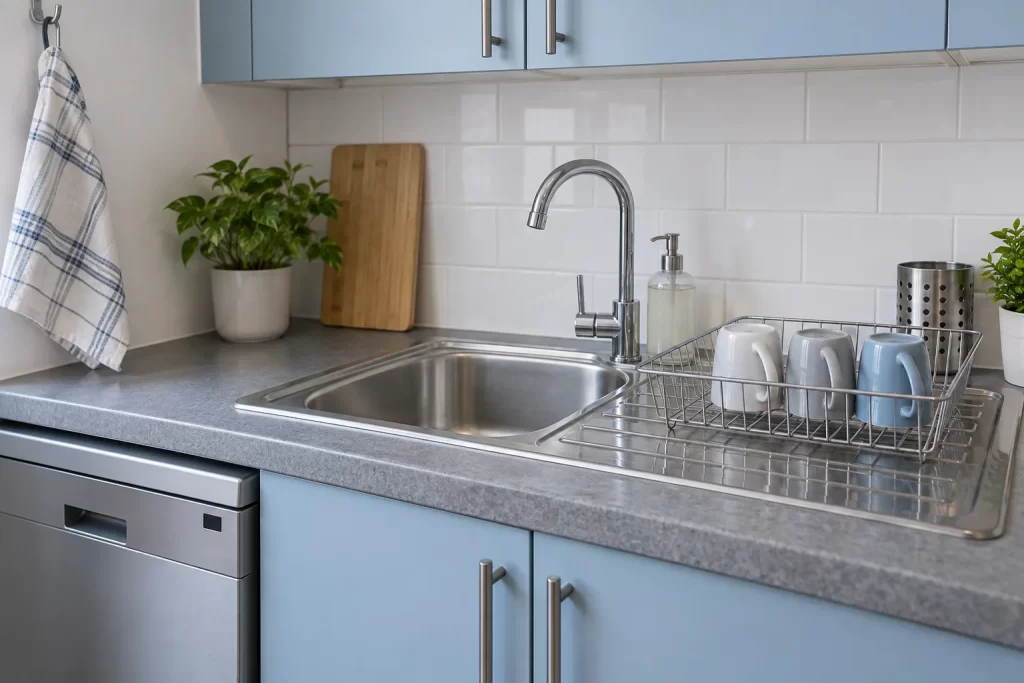
A row of lunch containers and chargers can turn a quick surface task into a series of ownership questions. Ask staff to remove personal things from the areas on the cleaning checklist. Provide a defined place for anything that must remain. The same clear, protect or leave-in-place approach helps staff prepare an area without guessing what they should move.
For a shared appliance, specify the work precisely. Wiping its exterior and cleaning its interior are different tasks. The same applies to a fridge: removing everyone’s food, cleaning shelves and putting items back involves arrangements that an ordinary surface wipe does not.
Mark equipment that must be left alone and make its operating instructions available to whoever is responsible for it. A staff kitchenette can contain anything from a basic kettle to a complicated coffee machine; avoid one blanket instruction to “clean all appliances”.
These details belong in the agreed office-cleaning plan. Tell the provider which areas staff will clear, when the kitchen is available and who can answer questions about the premises.
Fix missed jobs without rewriting the whole rota
When a task keeps being missed, identify which part has failed. Is the owner absent? Are supplies unavailable? Does the job take place before the dishwasher has finished? Changing a name will not solve a timing problem.
Use a short note that describes the task rather than blaming a person: “Dishwasher still running at the end-of-day check; move unloading to the next morning.” That is something the office can act on.
Keep contractor feedback in one channel through a nominated contact. If five people give five different requests during a visit, the cleaner may have no clear priority. Record an agreed change and make sure the revised scope and any cost are understood.
Review the arrangement when attendance changes, after a run of meetings or when new equipment arrives. Keep the parts that work. The test is straightforward: can the next person make lunch without first clearing someone else’s things, and can the cleaner reach the areas they are booked to clean?