Practical cleaning advice
Cleaning a Wool Rug: What to Check Before Adding Water
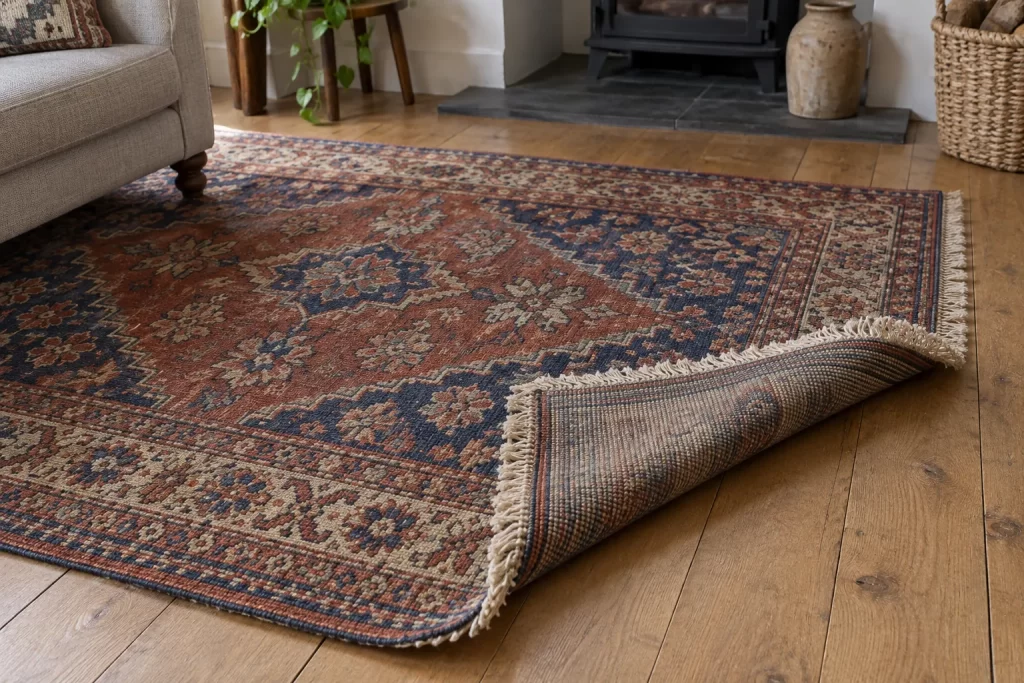
A wool rug is not automatically suitable for the carpet machine you use elsewhere in the house. “Wool” identifies a fibre, but it does not tell you everything about the rug’s dyes, backing, construction or other materials.
Water is not forbidden for all wool. The decision is whether the proposed process suits the whole rug, including the amount of moisture, mechanical action and cleaning product. Start there before filling the machine.
Read the fibre blend as a whole
Look for a composition label, the original product description or a receipt that identifies the range. A rug described casually as wool may contain another fibre with more restrictive care needs.
WoolSafe’s fine-fibre guidance advises treating a blend according to its most sensitive component. Its example is wool mixed with viscose: care suitable for wool alone may not protect the viscose.
This matters before you choose a cleaner marked for wool. The product still needs to suit the rug you own. Do not round an unfamiliar blend down to the fibre name you recognise.
If there is no label, make a record of what you do know: where the rug came from, approximate age, whether it has been cleaned before and any earlier problems.
Look at the pile and the underside
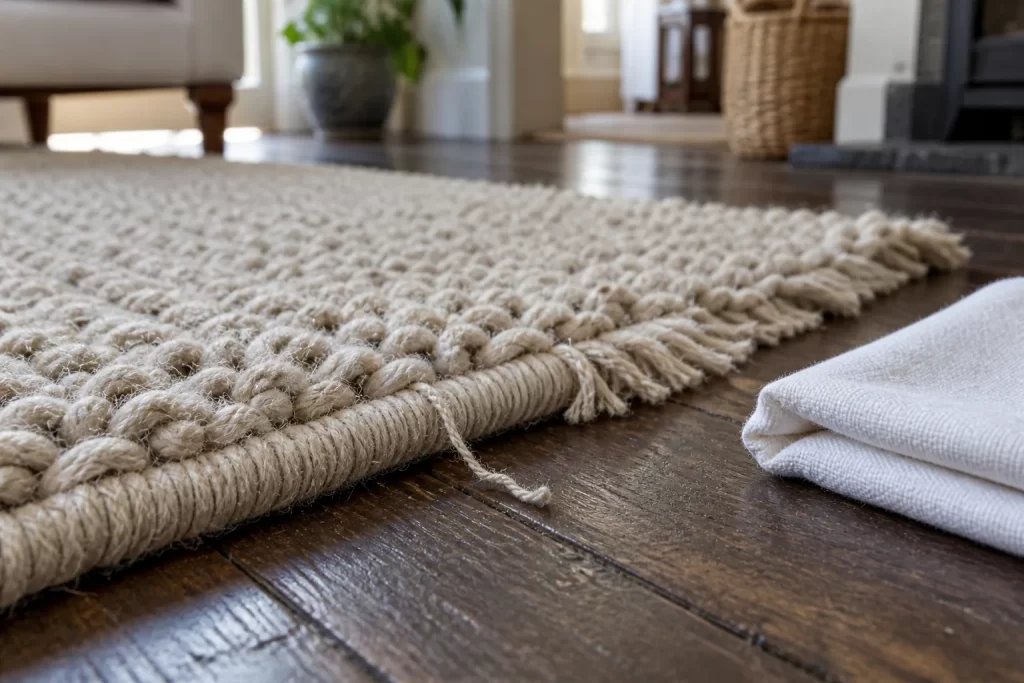
Examine an accessible edge without dragging the rug or folding it sharply. Note the pile shape, any loose loops, the fringe and visible backing. You do not need to name the construction correctly to describe it usefully.
Has the underside begun to shed? Is an edge loose? Is the rug layered over a separate underlay? Are several colours woven close together? Those observations belong in the cleaning decision, even if the top looks robust.
Vacuuming recommendations also vary with construction. Alternative Flooring directs owners to its individual wool-range instructions rather than one setting for every wool carpet or rug. It also gives different care guidance for wool mixed with delicate materials such as Tencel or sisal.
Do not run a rotating brush over a fringe simply because it works well on the centre. Keep loose ends and damaged edges clear of the vacuum head while you establish the appropriate dry-care method.
Check what the machine does to the rug
Before using a domestic carpet cleaner, check the machine instructions alongside the rug maker’s advice. Identify how it applies solution, agitates the pile and removes moisture. “Suitable for carpets” is too broad to answer whether it suits this rug.
The WoolSafe wool-carpet maintenance guide describes excessive wetting, unsuitable chemicals and too much mechanical action as sources of damage. It also cautions against brush or beater methods on some longer or coarser loop-pile constructions.
That combination is why choosing a mild-sounding detergent does not settle the question. A suitable product used with an unsuitable machine or too much moisture is still an unsuitable process.
Use these three checks:
- The rug: is the proposed method allowed for its materials and construction?
- The machine: do its instructions permit that use, with the correct settings and solution?
- The room: can the rug be handled and dried without creating a problem for its backing or the surface below?
If one answer is missing, leave a full wet clean until it is resolved.
Choose the product by evidence, not the word “natural”
A household mixture is not made suitable for wool because its ingredients sound familiar. Avoid treating vinegar, washing-up liquid or a general laundry detergent as a universal rug cleaner.
WoolSafe explains the limits of an unverified “suitable for wool” claim and recommends checking for its independently tested approval mark. It still calls for an inconspicuous-area test, including with approved products.
A small colour test is not permission to ignore backing, blend or machine restrictions. Follow the rug maker’s and product’s test directions; if you see colour transfer or another change, stop. Do not keep testing stronger versions of the same treatment.
For a fresh spill, contain it before choosing treatment
Blot accessible liquid with a clean absorbent white cloth rather than rubbing it into the pile. Alternative Flooring includes this as the first step in its wool spill guidance. Keep the cloth clean as you work and record what was spilled.
Then use the instructions for the actual rug and spill. A whole-rug extraction clean and a small spot treatment are different jobs. A fresh accident does not make it sensible to wet all the surrounding material.
If the rug is valuable, fragile, a delicate blend or already showing colour movement, seek appropriate specialist advice promptly. Tell them what you have applied and how the rug responded, including any treatment that made no difference.
Make the drying plan before the wetting plan
Decide where the rug can be treated and left while it dries. Consider the hard floor or fitted carpet beneath it, furniture resting on it and the route people use through the room. A rug that is easy to move when dry may be awkward to handle after treatment.
When discussing a rug-cleaning assessment, include both the material details and those practical limits. Confirm whether the work would happen in place or elsewhere and what the provider can accept. Antique or particularly fragile textiles may need a specialist beyond ordinary domestic cleaning.
If fitted flooring underneath also needs carpet cleaning, describe it separately. One appointment can involve two different materials and two different care decisions. If that fitted carpet is being treated too, plan where people and furniture will go during drying before booking both jobs together.