Practical cleaning advice
Can You Wash Removable Sofa Covers? Check Before You Unzip
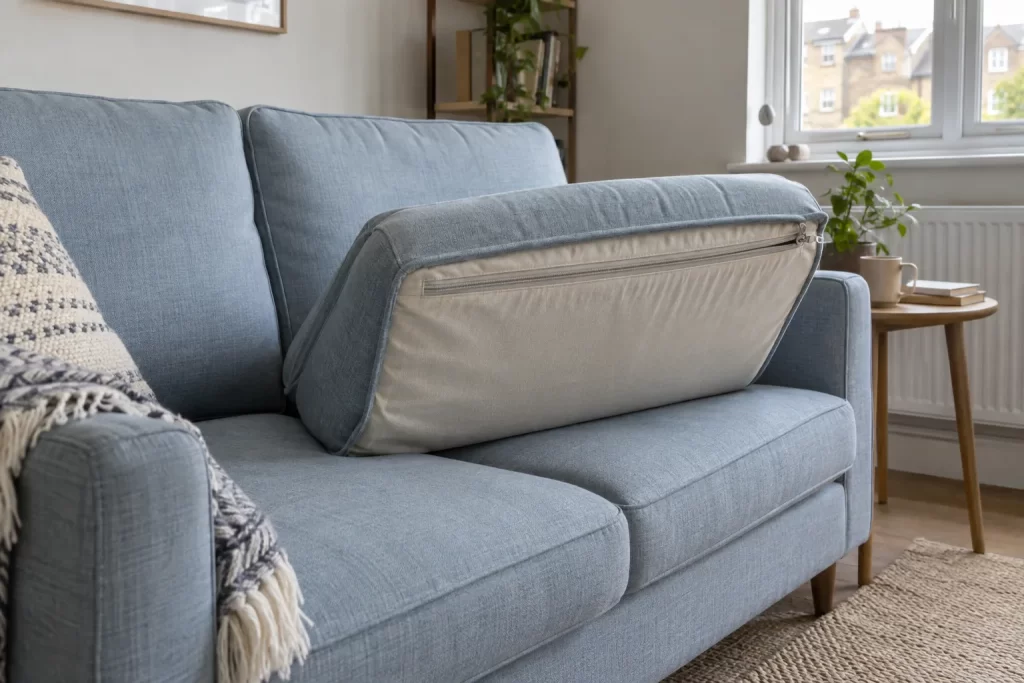
Only wash a removable sofa cover if the care instructions for that exact cover allow it. Being able to unzip it tells you how it comes off. It does not tell you that it can go in the washing machine.
Check before stripping the sofa. With a pile of covers beside the machine, it is tempting to choose a cool cycle and hope. Leave them in place while you find the instructions and work out how the sofa will go back together.
Find the instruction for your fabric, not just your sofa
A sofa range may be sold in several fabrics. Advice for a washable version is not automatically advice for the one in your room, even if the shape and model name match.
Look under the seat cushions or on the underside of the sofa if those cushions are fixed. These are the label locations described in Sofa.com’s care guidance, which directs owners to instructions for their particular fabric. You may also have an order confirmation, fabric name or product number that helps the manufacturer identify it.
Read the full instruction. Washing, bleaching, drying, ironing and professional cleaning are separate decisions. Permission to use a machine does not settle all the others.
For a concrete example, the IKEA MANNARP Gunnared beige cover is listed as machine washable at a maximum of 40°C, with no tumble drying. Those instructions apply to that product; they are not a recipe for a different sofa. The example shows why reading only the washing temperature leaves part of the job unanswered.
Choose one of these three routes
| What you have found | The sensible next step |
|---|---|
| The exact cover is explicitly machine washable | Follow all its instructions, then check that your machine and drying space can accommodate it. |
| The label restricts washing or specifies professional care | Keep to that restriction. Ask a suitable cleaner about the cover and show them the label. |
| The label is missing, unclear or belongs to another part | Pause and identify the fabric through the maker or retailer before applying a treatment. |
A photograph of a similar sofa online is not enough to resolve the third situation. Neither is a neighbour’s successful wash. The useful information is the product you own, the fabric fitted to it and any care history that may affect the decision.
If the label and an online listing disagree, send the manufacturer photographs of both and the product details. There is no advantage in testing which instruction was right on a full set of covers.
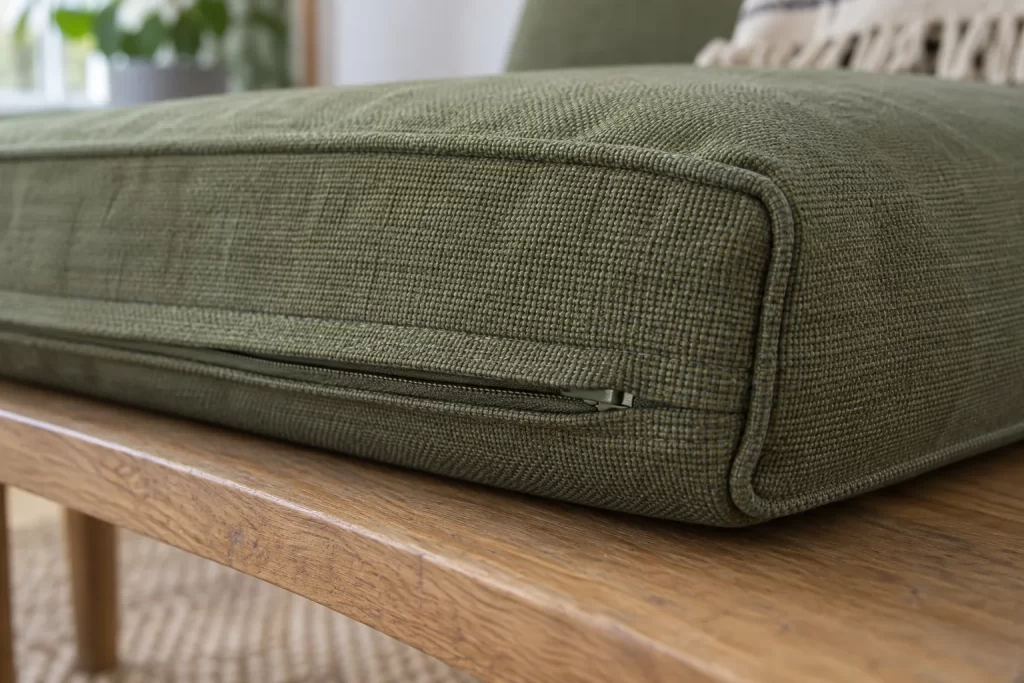
Check what actually comes off
A loose scatter cushion, a seat cushion cover and the fabric around the frame are different pieces. Inspect them separately. Photograph the sofa before removing anything, including where each piece belongs and how its seams and fastenings sit. That gives you a reference when putting it back together.
Do not assume that removing a cushion cover means the filling can be washed too. The cover’s instructions may say nothing about the pad inside it. Keep those decisions separate, particularly if the reason for cleaning is a spill that seems to have gone beyond the outer fabric.
Look at the extent of the problem. If one seat has a mark and the arms are also dirty, laundering that single cover may not deliver the overall result you had in mind. Equally, there is no reason to dismantle the whole sofa just because you have found a zip.
If washing is permitted, plan the whole job
Start with capacity. Can the cover move as required in your washing machine, within both the appliance and cover instructions? A piece that can be pushed into the drum is not necessarily an appropriate load.
Sofa.com advises owners to consider the covers together to avoid colour differences, while also warning against overloading the drum. Read that alongside the actual cover instructions: some specify separate washing. Do not squeeze a whole set into one load to satisfy general advice when the specific product or appliance says otherwise.
Then decide where each piece will dry. A narrow flat may have room for one clothes airer but not a large frame cover spread across every available chair. Keep walkways usable, and follow the permitted drying method rather than improvising with a heater or a tumble dryer.
Leave time for refitting as well. There is no universal instruction to put every cover back on while damp, and there is no universal drying duration. Follow the manufacturer’s directions for the product. If refitting is difficult, stop rather than forcing a zip or pulling hard on a seam.
Finally, plan where people will sit. This sounds minor until every seat is uncovered and you still need the room that evening. It is a good reason to choose another day, not a reason to shorten the required care process.
When a cover wash will not answer the problem
If the sofa only needs crumbs removed and the room needs a tidy, start with an ordinary room-cleaning sequence and the upholstery instructions for routine care. You may be able to leave the covers in place.
Describe what you are trying to improve before choosing a method. Is there one visible food mark? General darkening on the arms? An old spill that reached the cushion? A pale area that may be wear? These are different starting points.
Take photographs in ordinary daylight and note anything already used on the fabric. Keep the names of stain products if you have them. This gives the maker or cleaner useful information without requiring you to diagnose the material yourself.
If washability remains uncertain, or the fixed upholstery also needs attention, you can ask about assessing the sofa for suitable cleaning. Confirm the pieces included and the limits of the proposed treatment. Do not assume that a professional visit means every fabric or stain can be treated.