Practical cleaning advice
A Mattress Care Routine Between Professional Cleans

The next time you change the sheets, pause before covering the mattress again. Check the protector, look along the edges and notice any new marks. That small inspection is a more useful starting point than automatically reaching for a spray.
Everyday mattress care centres on the layers you can remove and look after, plus the maintenance allowed for the mattress itself. A washable protector, a mattress cover and the filling underneath are not the same thing.
Build the routine around a bedding change
You already have a moment when the surface is uncovered. Use it to do four things: inspect, deal with the removable bedding, allow suitable airing and remake the bed only when everything is ready. If you are also cleaning the bedroom, place this job before the final floor pass in your room-cleaning order.
Keep the mattress care guide somewhere easy to retrieve. A photograph of the product label and a saved link to the manufacturer’s instructions is enough. You should not have to search for them each time you notice a spill.
Look before you cover it
Check the part you sleep on, the accessible edges and the protector’s corners. Has the protector slipped? Is a seam damaged? Is there a new mark on the mattress below an apparently clean sheet? Take a photograph if something has changed so you can compare it later.
This does not need to become an inspection of every internal layer. Leave fixed covers and inner casings in place unless the manufacturer instructs otherwise. Record what you can see without dismantling anything.
Separate a laundry task from a mattress problem. A marked protector that can be washed is one job. Moisture that has reached the mattress, a damaged cover or a persistent smell needs a different decision.
Launder the removable layers on their own terms
Read the instructions for the sheet, protector and any removable cover separately. They may not allow the same wash or drying settings. Avoid setting one hot cycle for everything simply because it all came off the same bed.
IKEA’s GRUSNARV protector instructions warn against washing it with items whose zips or buttons could damage its waterproof layer. Check the restrictions on your own protector rather than treating all protective bedding as interchangeable.
Have a dry replacement ready if the washed item will not be ready by bedtime. A spare protector can be more practical than trying to hurry an unsuitable drying method. Once dry, check that it sits correctly before putting the sheet back on.
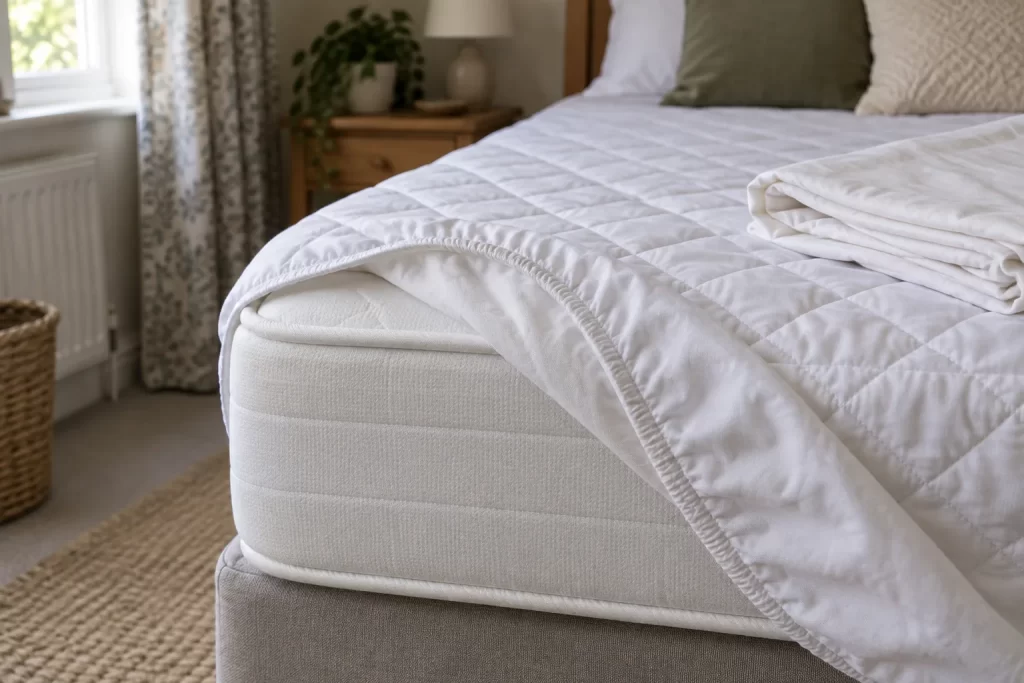
Give the mattress air without making a project of it
Turn back the bedding during the airing period recommended for your bed. Hypnos recommends regular airing with the linen turned back to let moisture dissipate.
Plan it around the room you have. If the bed is also your temporary place for clean laundry, put the laundry elsewhere while the mattress is uncovered. A heap of folded towels on top defeats the point of leaving that surface clear.
Keep the room’s normal ventilation usable and follow the bed maker’s base requirements. TEMPUR’s product-care guidance, for example, calls for a ventilated base. Do not assume that packing the space around a bed with storage is compatible with every design.
Do not make vacuuming a universal rule
A vacuum may seem the obvious way to remove visible dust, but manufacturers differ about whether it is suitable. Hypnos specifies a soft brush and advises against vacuuming its beds because of the effect on upholstery fillings. TEMPUR’s current cleaning and maintenance guidance also advises against vacuuming its textile covers.
Use the dry-care method intended for your mattress. If the instructions permit vacuuming, follow the specified tool and technique rather than applying the settings you use on the bedroom carpet. If they recommend brushing, keep the brush clean and reserve it for that task.
Separate rotation from turning over
Rotation moves the head end to the foot end while keeping the same sleeping surface uppermost. Turning over changes which face you sleep on. A mattress can permit one without the other.
TEMPUR’s FAQs say its mattresses should not be turned over. Hypnos distinguishes seasonal-turn models from single-sided designs. Follow the schedule and movement for your model, including any special arrangement for different sleeping sides.
If rotation is part of the instructions, put the reminder alongside another household task you already remember. Arrange help before starting. Clear bedside objects and the route around the bed; do not improvise a manoeuvre halfway through it. Hypnos also cautions that its sewn handles are for positioning rather than carrying the mattress’s full weight.
When something spills
Remove wet bedding and follow the mattress maker’s immediate spill instructions. Hypnos, for instance, recommends dry towels or paper towels rather than detergents. Do not turn a contained accident into a larger wet area by pouring a general cleaning mixture over it.
If moisture has reached the mattress, make a plan for sleeping elsewhere until you know what care and drying are appropriate. A fresh sheet does not resolve the wet layer below.
For a mark you cannot deal with under the product instructions, describe the mattress type and history when considering a mattress-cleaning assessment. Some materials or damage may make treatment unsuitable.