Practical cleaning advice
Why Two Cleaning Quotes for the Same Flat Can Differ
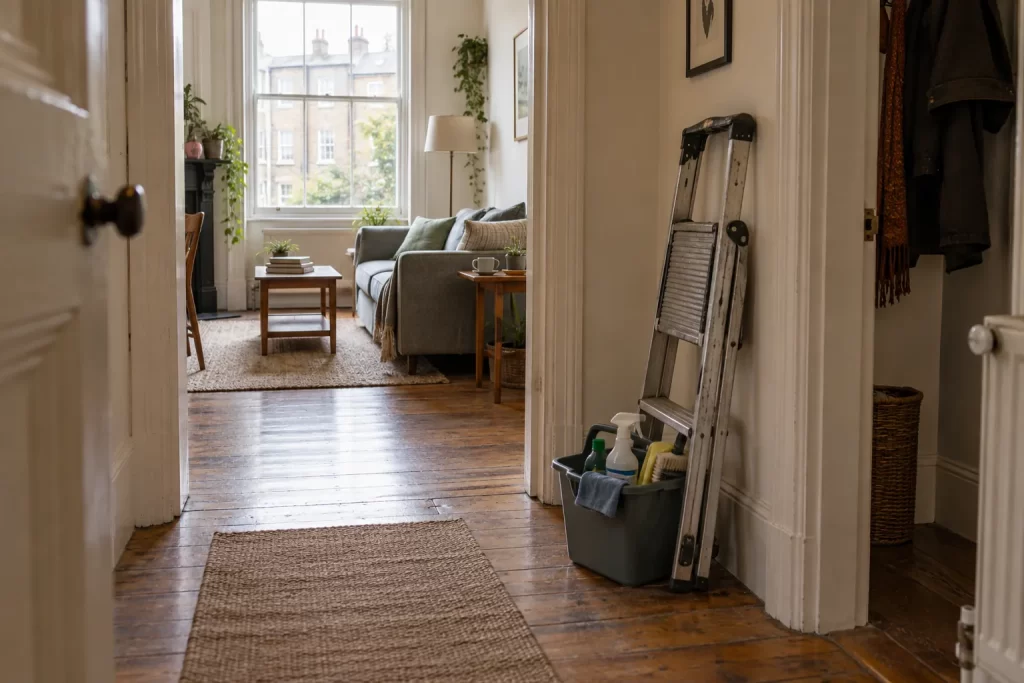
Two quotes can describe the same flat and still price different jobs. One may allow three hours for accessible surfaces and floors. Another may include extra time for kitchen build-up, cupboard interiors or moving light furniture. Comparing the totals without comparing the work tells you very little.
Start by putting both offers into the same units: the total you would pay for the same agreed list of tasks. An hourly rate is one part of that calculation.
A lower hourly rate, a higher total
The following figures are invented to illustrate the calculation. They are not NeatFulham prices or a survey of London cleaning rates.
| Illustrative quote A | Illustrative quote B | |
|---|---|---|
| Hourly rate | £24 per cleaner | £28 per cleaner |
| Staff and time | One cleaner for four hours | Two cleaners for one and a half hours each |
| Total cleaner-hours | 4 | 3 |
| Labour calculation | 4 × £24 = £96 | 3 × £28 = £84 |
Quote B has the higher hourly rate but the lower labour total. That does not make it better. You still need to know whether both cover the same work and whether the shorter allowance is realistic for the condition of the flat.
The distinction between cleaner-hours and appointment length matters. Two people working for an hour and a half provide three cleaner-hours. They do not necessarily complete every job in exactly half the time one person would take: access, equipment and tasks can limit what happens simultaneously.
Look for wording that says whether the rate is per cleaner, for the team or for the whole visit. If it is unclear, get it clarified before comparing anything else.
Give both companies the same description
“Two-bedroom flat” leaves a lot unstated. Is it empty or occupied? Is the second bedroom mainly storage? Does the kitchen need an ordinary wipe or attention to old grease? The quote should reflect what the cleaner will encounter.
Send the same short room list to both providers. Describe the work rather than using a label such as “full clean” and expecting everyone to interpret it in the same way.
- Kitchen: name the surfaces and say whether appliance or cupboard interiors are requested.
- Bathroom: describe visible build-up and any surfaces needing particular care.
- Living areas: say what is accessible and what remains under furniture or belongings.
- Floors: distinguish ordinary vacuuming or mopping from a separate carpet treatment.
- Access: explain floor level, entry arrangements and practical restrictions.
Photographs can make that description clearer. Include a wider view as well as the worst detail, so the recipient can understand the space around it. Do not send an empty-room photo if the flat will be full of boxes on the day. Agree which belongings will be moved before the cleaner arrives, so both quotes allow for the access you can actually provide.
Compare the edges of the job
Read the conditions around the main price. Put those details beside each other before deciding.
Included work versus requested work
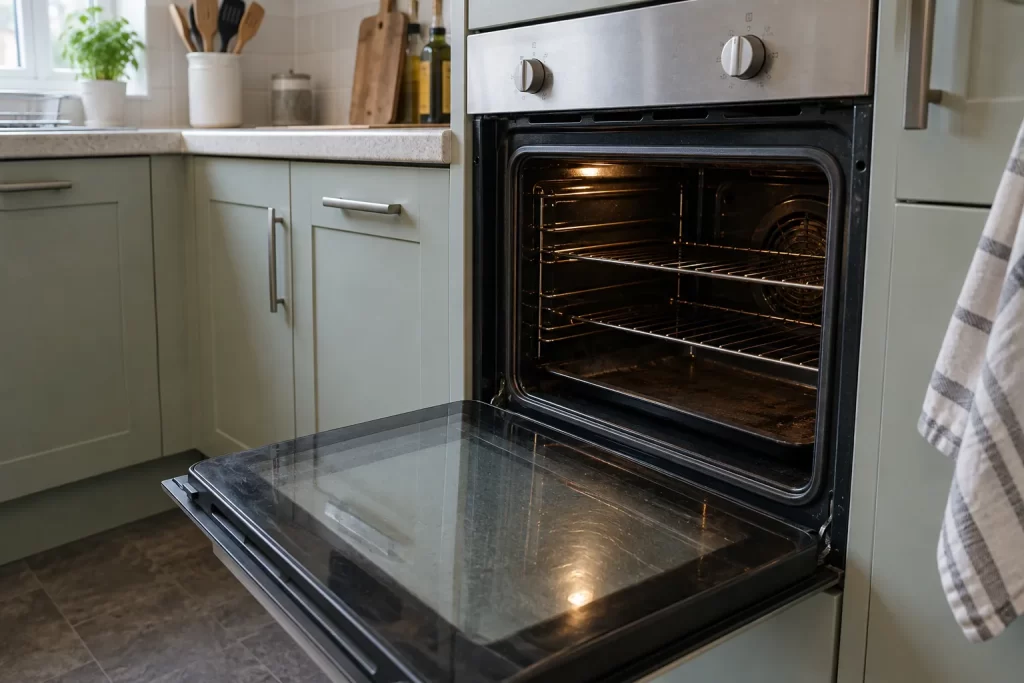
A task mentioned in your enquiry is not automatically included in the reply. Check that the quote confirms it. “Kitchen cleaning” may leave you uncertain about the oven interior, the tops of tall cabinets or the inside of the fridge.
If one offer includes a task the other does not, ask for a comparable version rather than assuming the extra task is free. NeatFulham’s one-off cleaning scope, for example, treats additions such as appliance interiors or heavy build-up as matters that can change the quote.
Supplies and equipment
Record who provides the cleaning products, vacuum and other equipment. If you must supply something, check what is needed and whether you have it. A labour-only offer and an offer including equipment are different propositions even when the headline rate matches.
Minimum charges and extras
A minimum charge can make a small job cost more than its individual item price suggests. Ask for the payable visit total, not just the smallest number on a price list. Check whether travel, parking or other specified charges apply, and whether the amount quoted includes any applicable VAT.
Do not calculate a saving from a discount until you know the conditions and the resulting total. Adding a service you did not need can increase the bill despite a lower rate for one item.
What happens when time runs out?
An hourly booking with a fixed time limit and a fixed-price task list need different expectations. With the first, you may need a ranked list of priorities. With the second, clarify what the agreed outcome includes and what would change the price.
Decide who can approve extra work. You should not discover afterwards that an optional task was treated as permission to extend the visit.
Put the offers on one comparison sheet
For each offer, write one line for each of these points:
- The rooms and tasks explicitly included.
- The tasks explicitly left out.
- The staffing, time allowance and basis of charging.
- The total payable for that scope, including confirmed extras.
- Who supplies products and equipment.
- The rule for changes, extra time and unfinished lower-priority jobs.
Mark an unanswered point as unknown. Do not fill it in with what another company offered.
If the main difference is the depth of kitchen or bathroom work, compare that detail directly. A deep-cleaning enquiry should explain the build-up and accessible surfaces; it is not a request for unlimited work under one name.
Choose after the unknowns have been resolved. The useful price is the one attached to a clear job you want done, within arrangements you can accommodate.