Practical cleaning advice
Planning Your Day Around Carpet Drying in a Small Flat
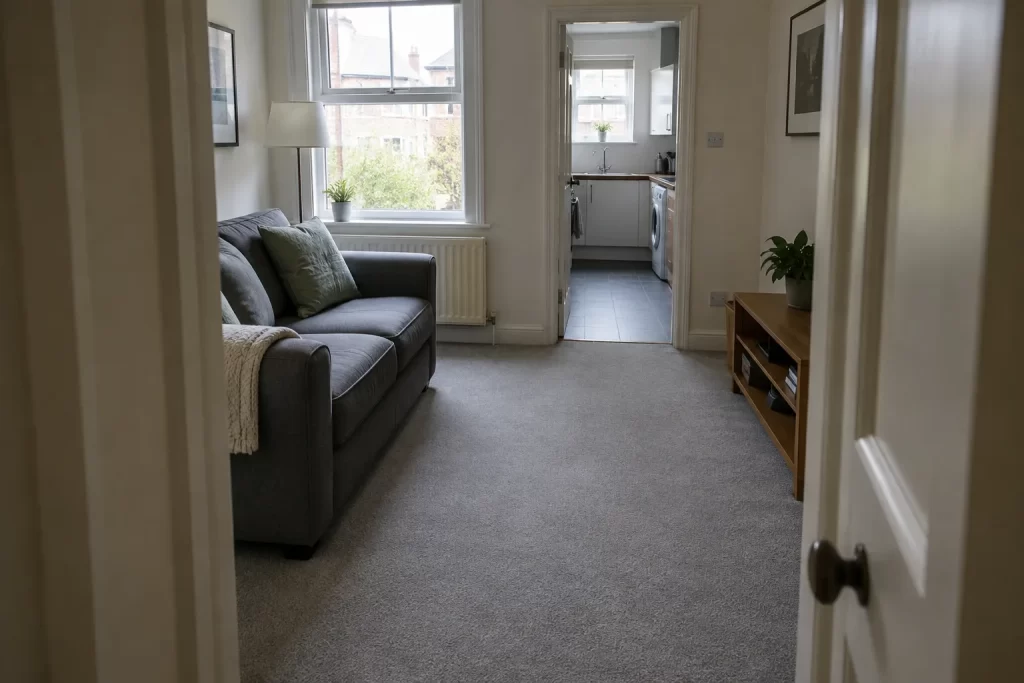
If your living-room carpet is also the only route to the kitchen, drying time affects more than where you can put your feet. It affects lunch, work, pets and the moment you can return furniture to its usual place.
Plan around the period when the area may be unavailable, rather than building the day around an assumed number of hours. The treatment, carpet and room conditions matter. Get guidance for the actual job, then leave room for the plan to change.
Before booking: draw the route you cannot avoid
Sketch the flat on a piece of paper. Mark the rooms being cleaned and trace the routes to the front door, bathroom, kitchen and the place you will spend the day. You do not need a scale drawing. You need to spot where all those routes cross the carpet.
In a flat with a separate kitchen, you may be able to use that room while the lounge dries. In an open-plan space, the clean may affect almost everything you normally do at home. A carpeted hallway can be the most restrictive part even though it is smaller than the other rooms.
Explain that layout when arranging carpet cleaning. A job described as “one room” can still block access to the rest of the property. Ask whether the work can be sequenced around essential access, or whether a different day or scope would be more practical.
Do not solve the problem by planning to step over wet areas, lay a makeshift bridge or block an exit with furniture. If the only route cannot remain usable as required, change the arrangements before the appointment.
The evening before: move what you will need
Put everyday essentials in the area you expect to use: laptop, charger, medication, children’s things and anything needed for meals. Take your coat and keys out of the room if you plan to leave. This is easier than remembering each item from the doorway after the floor has been treated.
Arrange a suitable place for pets away from the work and drying area, with their usual necessities accessible. The same principle applies to children: a play space should be somewhere you can actually use, not merely the corner that is farthest from the machine.
Check any other appointments. A furniture delivery, visiting tradesperson or guest arriving shortly after the clean may need the very route you are trying to keep unused. Move the conflicting event or explain it when agreeing the cleaning date.
Decide where the furniture goes
Move small loose items from the agreed area. For heavier furniture, confirm the arrangement with the cleaner; do not assume the whole room will be emptied or dismantled.
Give relocated pieces a destination. A coffee table moved into the hall may clear the carpet while blocking the exit. In a small flat it may be more sensible to agree cleaning around a large item than to create an unsafe stack of furniture elsewhere.
On the day: agree the drying instructions before the team leaves
Make a short record of the aftercare for your carpet. It should answer these points:
- Which areas have been treated and which remain available?
- What ventilation or other drying measures are suitable in these rooms?
- When and how should you check whether normal use can resume?
- When can furniture be returned or any protective tabs removed?
- Who should you contact if the carpet remains damp beyond the advised period?
In its section on DIY extraction cleaning, the Carpet and Rug Institute’s residential standard advises waiting for the carpet to dry before walking on it or replacing furniture. It also describes protection beneath furniture to prevent colour transfer. Keep any protection in place for the period your cleaner specifies rather than tidying it away immediately.
Make sure other members of the household know the arrangement. One person’s careful plan does not help if someone comes home and puts the dining chairs straight back.
Ventilation needs to suit the weather and the room
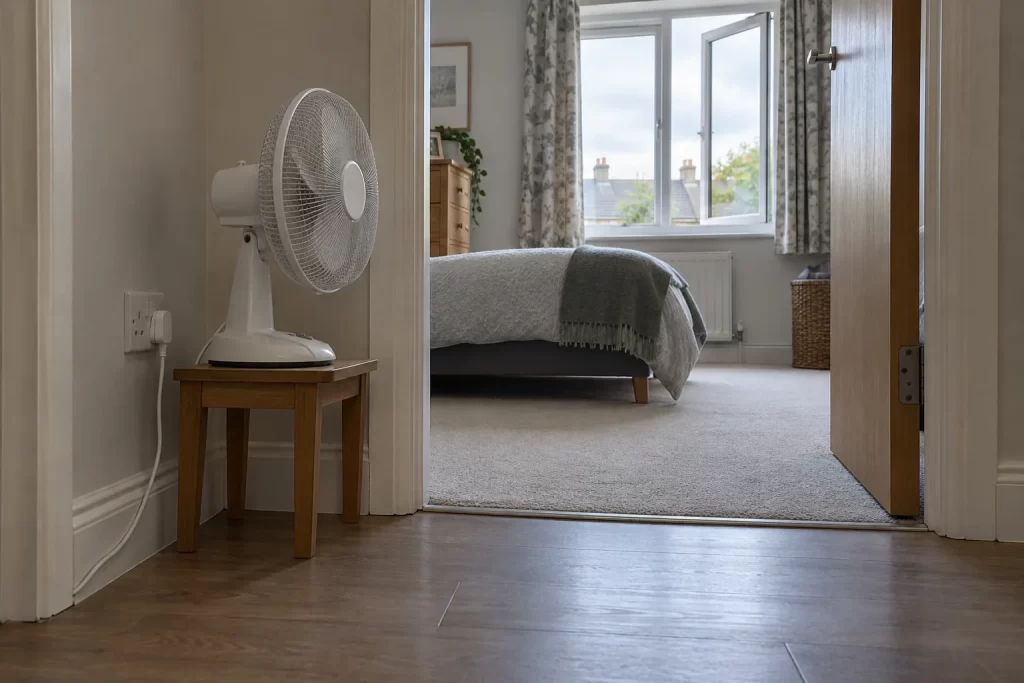
Air movement and suitable ventilation can assist drying. The same section of the CRI standard recommends opening windows only when outdoor conditions permit and describes using fans where appropriate. For your professional clean, follow the aftercare agreed with the cleaner. Choose a ventilation plan that fits the conditions that day.
Tell the cleaner if windows are sealed, difficult to open or must stay closed while you are out. Be honest about what the flat can accommodate. A theoretical airflow plan is little use if it depends on leaving an accessible window open unattended. If a window is persistently misted before the visit, check which surface is affected so you can describe any existing glazing or ventilation concern.
If a fan is part of the agreed plan, position it according to its instructions and keep its cable away from walking routes. Do not improvise with concentrated heat to meet a deadline. Use the drying measures appropriate to the carpet and equipment, and keep the room available for them to work.
Check the room as advised, while keeping pets and unnecessary foot traffic away.
Have a second version of the day
A useful backup is specific. If the lounge is still unavailable when work starts, where will you sit? If you planned to go out, who will check the room later? If dinner needs the route across the carpet, what is the alternative?
You may decide to spend part of the day elsewhere or to schedule the clean when fewer people need the flat. Avoid booking it immediately before an event that depends on every room being ready.
If you are also arranging sofa cleaning, include the seating in the plan. A dry carpet is not enough if the only sofa is still out of use. Separate treatments have separate aftercare, even when carried out during the same visit.
Before returning the room to normal, follow the agreed checks and instructions. If the condition is not what you were told to expect, contact the cleaner instead of covering it with a rug or moving all the furniture back. Keep the room plan until normal use has actually resumed. If a treated patch reappears, note when you noticed it and use the returning-stain observation guide to describe the change.