
“The kitchen needs a deep clean” tells a provider where to look, but not what work is waiting there. A useful request describes the grease, residue and access in observable terms. It identifies which appliances are included, which cabinets will be empty, and whether a mark may be damage rather than dirt. That detail gives the cleaner a chance to estimate time and choose an appropriate method before the appointment.
Walk through the room in good light. Start with the surfaces used every day, then look at the edges and upper areas that ordinary cleaning often misses. Photograph the worst sections if a provider accepts photographs, including a wider view to show size and a close view to show texture. Do not exaggerate the condition or hide difficult areas. An accurate brief is more useful than an impressive promise that the job is “probably quick”.
Separate ordinary use from accumulated deposits
Fresh crumbs on a worktop and a greasy film above a hob are different tasks. The first is usually part of routine cleaning. The second may need more time, a suitable product and repeated careful passes. Tell the provider where the build-up is, how widespread it is and roughly how long it has been present if you know. Avoid guessing at a chemical cause; simply describe what you can see and feel.
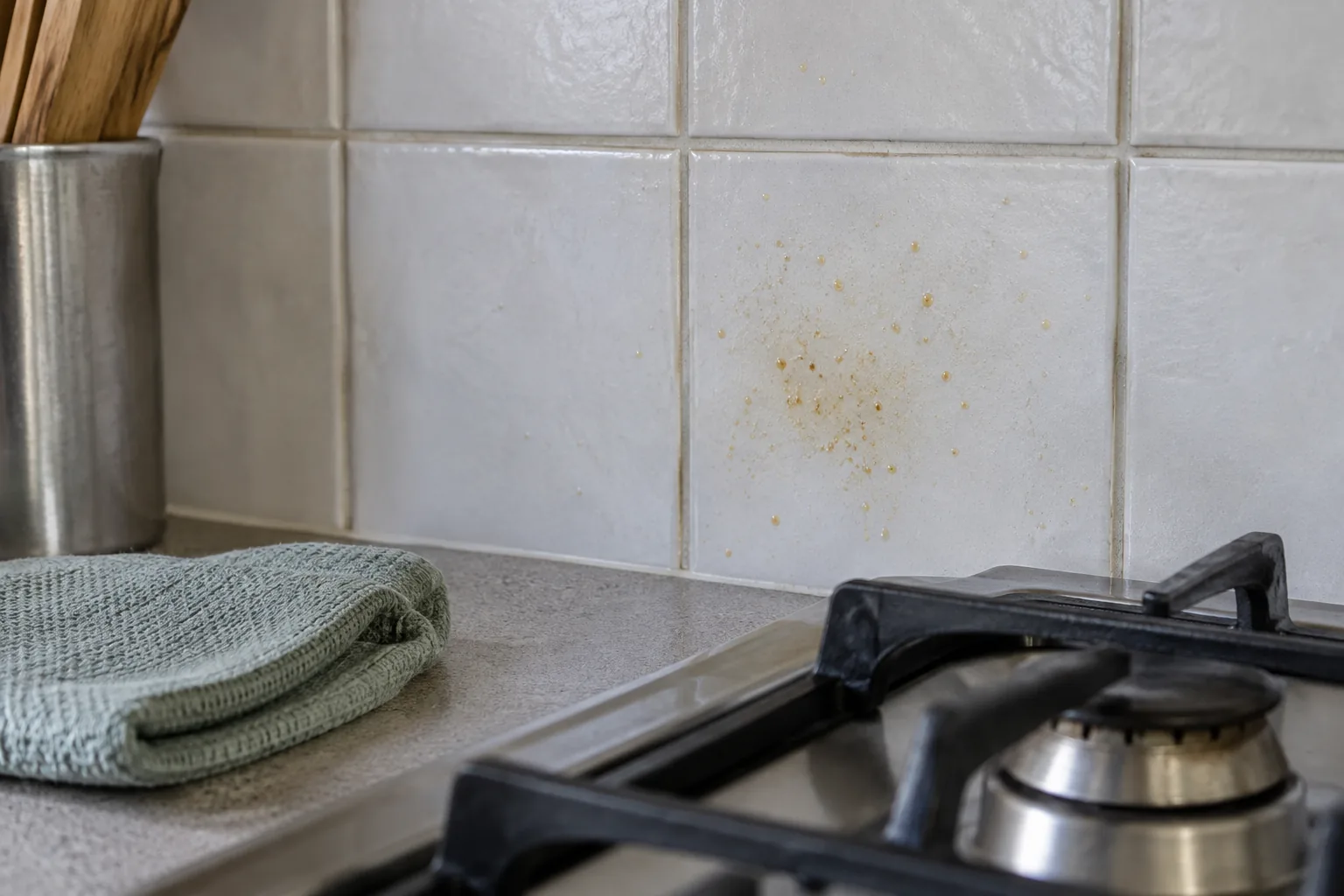
Look for splashes on the hob, residue around burner controls or dials, grease on cabinet fronts, marks along the splashback and sticky surfaces near the extractor. Note whether the grease is confined to the cooking zone or extends along upper cabinets. A small patch of dark residue on one tile is a different job from a long, tacky strip above every cupboard. The same phrase “greasy kitchen” can conceal either condition.
Check the sink and taps separately. Mineral deposits, soap residue and old marks may need different care from cooking grease. State whether the sink drains properly and whether any fittings are loose or damaged. A cleaner should not be expected to repair a faulty tap or remove a mark that has altered the finish. If a seal is failing, mention it before treatment so water is not pushed into an area that should remain dry.
Name the exact surfaces and materials
Many kitchens combine laminate, painted wood, stone, stainless steel, glass, tile and sealant. A product suitable for one may be wrong for another. List any known finish, especially stone worktops, coated metal or painted cabinet doors. If you have manufacturer’s care instructions, make them available. If you do not know what a material is, say so; a provider can then assess or avoid an aggressive treatment.
Point out existing scratches, chips, peeling paint and worn coatings. These defects can make a surface look dirty even after cleaning, and abrasive work can make them worse. A patch test on an unobtrusive area may be appropriate where the product and material allow it. Do not insist on a particular chemical or tool simply because it worked in a different kitchen.
The floor needs its own description. Are there sticky patches near the cooker, food beneath the table or dark lines along the skirting? Is the finish sealed, damaged or uncertain? Do not assume a stronger wet method is suitable for every floor. State whether small furniture can be moved and whether the room must be usable immediately afterwards.
Decide what “inside” means for appliances
The inside of an oven, microwave, fridge or dishwasher should be named individually. Some providers treat appliance interiors as separate tasks or services. An oven with months of baked-on residue can dominate the time allocated to a kitchen. A microwave with a few fresh splashes is a very different job. Give a candid description and ask whether the quoted service includes the interior, racks, trays or removable parts.
If you want a fridge cleaned inside, empty it safely and arrange temporary storage for food that requires refrigeration. Defrosting a freezer may take far longer than the cleaning appointment and can create water-management issues. Ask what preparation is expected rather than assuming the cleaner will unplug, defrost and restore an appliance within a normal kitchen slot.
Moving heavy appliances requires particular care. A cleaner may be able to clean accessible edges but may not be insured or equipped to disconnect or shift a cooker or fridge. Cables, water connections, flooring and stability all matter. State what access already exists and agree in advance whether any appliance will move. The phrase “behind everything” is not a safe or measurable instruction.
Explain the cabinets and storage areas
Cabinet fronts are visible and usually accessible; the inside of cabinets is not unless contents are removed. Decide whether you want fronts, handles, tops, shelves or the entire interior. If shelves are to be cleaned, empty them and check that they are dry before restocking. Do not ask a cleaner to sort food, medicines or personal belongings without a separate agreement about handling them. The same access principle is explained in the guide to preparing a cluttered room for a cleaner.
The top of upper cabinets is easy to overlook and can hold substantial cooking residue. Access may require a safe platform and enough space to work without leaning over appliances. Say how many cabinet runs there are and whether the tops can be reached safely. A narrow gap beneath a low ceiling is different from a broad, accessible shelf. If an area cannot be reached with suitable equipment, it may need to remain outside the scope.
Drawers and pantry shelves should be described by number and condition. A single empty cutlery drawer is a small task; a whole bank of stocked drawers is not. Decide what is worth doing now and what can be completed later. A deep cleaning visit works best when the hidden areas are specified, not implied by the label.
Give the provider evidence for the quote
Send a simple inventory: room size if relevant, the main problem areas, materials you know, appliances to include, cabinet interiors to include, access limits and photographs of heavy build-up. Ask which work is included in the quoted time or price and what would trigger a revised scope. A quote should be compared on the tasks it covers, not only on its total. The site’s article on why two cleaning quotes for the same flat can differ explains this wider comparison.
If a provider asks to inspect the kitchen, that can be a sensible response to uncertain condition. Long-standing grease or deposits around delicate finishes may be difficult to assess from a single photograph. Be wary of your own impulse to promise that “it will come off with a good scrub”. Some discolouration is wear, heat damage or a changed coating. Cleaning can remove soil, but it cannot necessarily restore a finish.
Keep household constraints in the brief. Tell the provider if the kitchen must be available for a meal, whether children or pets will be present and whether the extractor or windows can be used for ventilation. Products need to be used according to their labels, and treated food-preparation surfaces must be left suitable for normal use. The cleaner should have enough water, power and waste access to work safely.
Finish with a checkable list
Before the appointment, write down the agreed zones: for example, hob surface and controls; splashback; accessible cabinet fronts and handles; inside empty microwave; sink and tap; and exposed floor. Keep separate anything uncertain, such as old marks on a stone worktop or the inside of a heavily soiled oven. This lets you review the result fairly and record jobs that need another decision.
At the end, look at the agreed areas with the cleaner. Ask about residue left because of material risk, inaccessibility or a mark that appears permanent. A clear explanation is more valuable than repeated force on a delicate surface. A well-described kitchen deep clean targets the real build-up, uses the appointment time deliberately and leaves both sides aware of what remains.