
A one-off cleaner arriving at an occupied home has to work around the life already happening there. The rooms may contain work equipment, children’s belongings, pets, fragile objects and people who need to use the kitchen or bathroom during the visit. A useful brief tells the cleaner where they can work, what deserves time, and what must be left alone. It also gives you a way to check whether the work you want fits the appointment you have booked.
You do not need to make the home spotless before a cleaner arrives. You do need to make the agreed surfaces and floor areas accessible and remove decisions that only you can make. A cleaner cannot know whether a stack of papers is rubbish or a project, whether a bottle contains a product suitable for the floor, or whether the laptop on the table may be moved. Clear those points before the first visit rather than trying to explain them while the work is under way.
Describe the home as it is now
Start with the rooms, their condition and the tasks that matter. “Two bedrooms and a bathroom” is a useful outline, but it does not explain whether the second bedroom is occupied as an office, whether the bathroom has ordinary weekly use or whether the kitchen has accumulated grease. Mention the parts that are unusually soiled or blocked by belongings. Photographs of a specific problem area can help a provider assess the work, as long as they show the actual condition and respect household privacy.
Give the appointment a purpose. Are you catching up after an unusually busy month, preparing for visitors, or concentrating on a neglected kitchen? This guides the order of work. A general request for “a complete one-off clean” may be read very differently by you and the provider. State the outcome you want and the areas that can be skipped if the time proves short.
Ask what the one-off cleaning service includes. A single visit does not automatically cover inside cupboards, appliances, carpet extraction or moving heavy furniture. A provider can explain which jobs require separate time, equipment or assessment. If your list grows after the quote, discuss the change before the day of the visit rather than assuming the original slot will absorb it.
Mark the boundaries around possessions
Personal belongings need an owner. Put documents, jewellery, medication, cash and breakable keepsakes away yourself. This protects privacy and avoids a cleaner having to decide where they belong. Group items that must remain in a room in a box or tray so the intended work surface is accessible. The point is not to hide every sign of ordinary life; it is to allow cleaning without moving uncertain possessions from place to place.
Tell the cleaner whether books, ornaments and small appliances may be lifted for dusting. If they may not, say so plainly and accept that the space underneath will be outside the scope. If you want shelves cleaned thoroughly, arrange for their contents to be removed in advance or agree how each item will be handled. A short instruction is better than an unspoken expectation that every object will be moved and returned exactly.
For a crowded room, the site’s article on preparing a cluttered room for a cleaner offers a useful starting point. The extra question for a one-off appointment is how much of the booked time you want spent on that room. A large pile of belongings can make a small floor task impossible, but it can also divert attention from the bathroom or kitchen you value more.
Agree access before the doorbell rings
Explain how the cleaner will enter, whether someone will be present and how to contact you during the appointment. If the building has a concierge, entry code, intercom or lift arrangement, provide the authorised details through the booking channel. Check whether the cleaner needs a place to park or unload equipment. These practical facts affect the useful working time, especially in a short appointment.
Once inside, show the usable water supply, plug sockets and bin location. Identify any door that sticks, light that does not work or tap that needs careful handling. If a room is off limits, close it and say so. If the household will be working from home, name any periods when a desk area or call space cannot be entered. A workable sequence might let the cleaner use the bathroom while you are on a call, then switch areas when you can move.
Pets need a plan rather than a last-minute warning. Some are frightened by vacuums or can escape through an open door. Agree where they will stay and who is responsible for them. A cleaner should not have to manage an animal while carrying products and equipment. If a household member has a product sensitivity or strong scent preference, tell the provider ahead of time and confirm the products they intend to use.
Give a ranked list, not an endless list
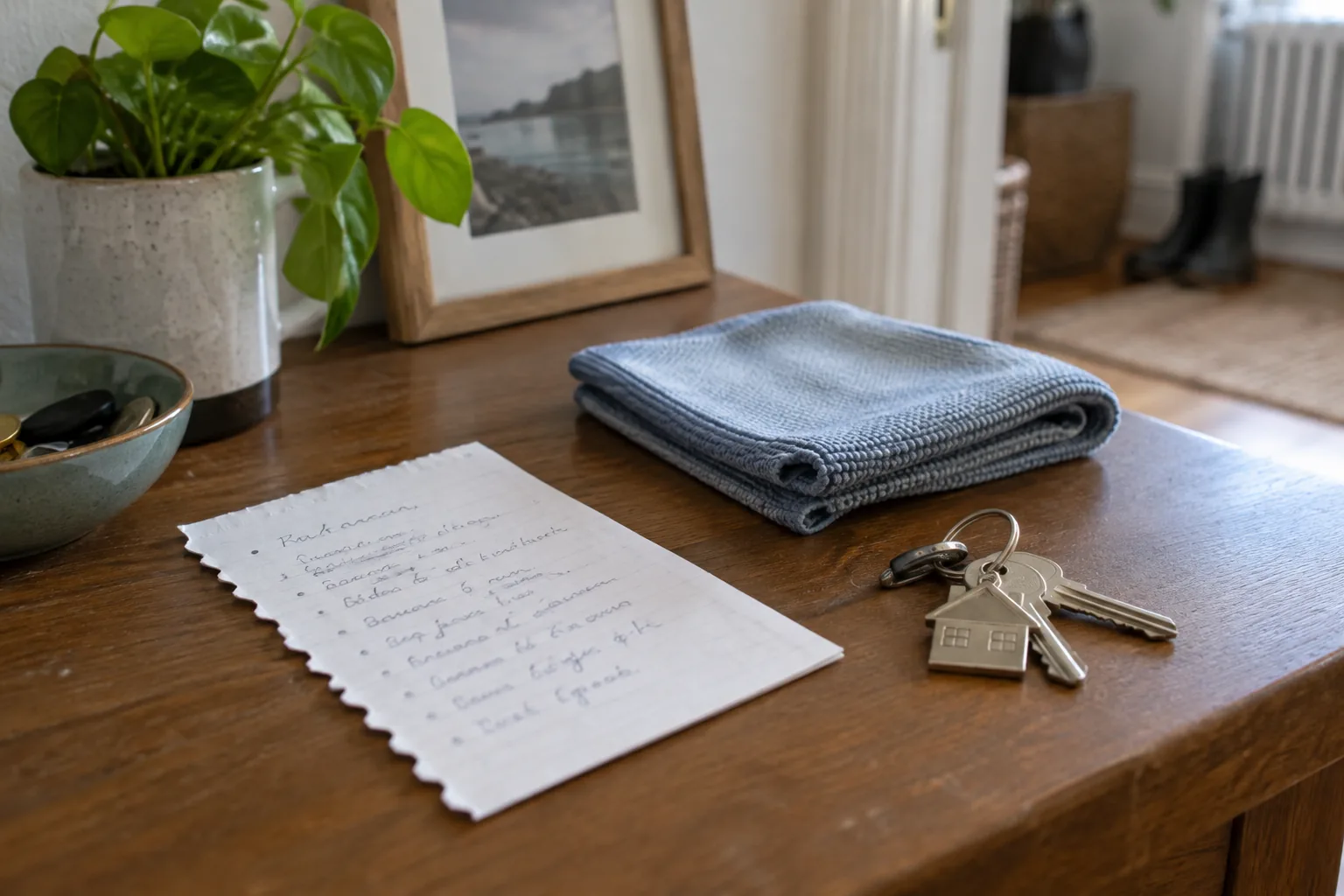
A timed visit calls for priorities. Separate your requests into three groups: essential, useful if time permits and separate work requiring a new quote. For example, the bathroom fixtures and accessible kitchen surfaces might be essential; reachable skirting could be optional; carpet extraction may need a distinct service. This allows the cleaner to make sensible decisions if an essential job takes longer than expected.
Point out any area that should receive less attention than its appearance might suggest. A lightly used guest room may need only a quick dust and floor clean, while the everyday bathroom needs most of the visit. Otherwise the cleaner may work methodically through a house and run out of time before reaching your main concern. A written list also gives both sides something concrete to check at the end.
There is value in asking what can realistically fit. Workload depends on the current condition, the number of accessible surfaces, materials and the amount of set-up. Two homes with the same floor area can need quite different time. The site’s guide to why two cleaning quotes for the same flat can differ explains why a task list is more useful than comparing a headline price alone.
Identify surfaces that need care
Tell the cleaner about stone worktops, oiled wood, delicate finishes, older fittings or any surface with a known manufacturer’s care instruction. Do not rely on appearance: a worktop that resembles stone may be a different material, and a coated tap may respond differently from plain chrome. If you are unsure what a finish is, say that rather than guessing. A small unobtrusive test or a decision to leave a mark untouched may be wiser than a rushed treatment.
Describe existing damage separately from dirt. A chipped tile, worn seal, scratched basin or mark beneath a rug will not necessarily be removed by cleaning. Photograph important pre-existing conditions for your own record where appropriate. This is particularly helpful when a one-off visit is booked ahead of a tenancy handover, although ordinary household cleaning and an end-of-tenancy clean can have different scopes.
State whether the provider brings products and equipment or expects to use yours. If using household products, keep their labels and instructions available. Do not decant chemicals into unmarked bottles. Products should not be mixed, and the cleaner needs to know about any finish that has already reacted badly to a treatment.
Keep the household usable during the visit
An occupied home cannot always be vacated. Plan around the work instead. If the kitchen must be used for a meal, agree when its surfaces will be cleaned and given time to dry. If a bathroom is the only one in the home, ask when it will be temporarily unavailable. Move chargers, cables and loose items from the floor before vacuuming starts. These adjustments protect the appointment from repeated interruptions.
Do not assume every room can be cleaned at once by moving from one space into another. Wet floors need a safe route, and a recently cleaned sofa or carpet may need time before use. If you need a room available immediately after the visit, raise that when choosing tasks and methods. A provider can then say what is realistic instead of discovering the constraint after work begins.
At the end, walk through the agreed priorities while the cleaner is still present. Ask about any item left untreated, particularly where the reason is material risk or lack of access. Record remaining jobs for another occasion rather than asking for extra work to be fitted into the last minutes. A one-off visit is most successful when the cleaner can spend their time cleaning, with the household decisions already made by you.