
A shared flat needs two agreements, not one: what each resident does as they use the space, and what happens during the planned clean. A rota that says “kitchen, bathroom, living room” misses the decisions that usually cause friction. Who deals with pans left overnight? Who notices the bin is full? Can someone move the belongings on a dining table before it is wiped? Those questions are more useful than a list of rooms.
The aim is to keep common areas usable without asking one flatmate to police everyone else. A short written plan helps because people can refer to the same tasks even when their work hours rarely overlap. It also makes a professional visit easier to arrange: a cleaner can maintain agreed surfaces, but cannot decide which possessions belong to whom or negotiate house rules at the door.
Start with the points of shared use
Walk through the common spaces and identify where several people create work. In the kitchen this may be the hob, sink, worktop and bin area. In the bathroom, it may be the basin, shower screen and floor. The entrance may gather shoes and grit, while the sitting room may double as a work area. Write down what actually happens in the flat rather than copying a generic schedule.
Separate an immediate job from a periodic one. A food spill needs attention when it happens; a scheduled cleaner should not encounter it days later as a normal starting condition. The inside of an oven, by contrast, may be a periodic job that needs a separate discussion about scope. A useful rule is that the person who creates a fresh mess handles it, while the group shares the recurring maintenance of common surfaces.
Use plain task descriptions. “Leave the sink clear of dishes before bedtime” tells residents what to do. “Be respectful” does not. “Wipe the accessible kitchen counter on Sunday” can be checked. “Keep the kitchen clean” invites different interpretations and arguments about whether a few crumbs count.
Give daily habits an owner
Not every task needs a formal rota. Each resident can wash or put away their own dishes, clear their own food packaging and return belongings to their own space. These habits stop a booked cleaner from spending the appointment shifting personal items. They also mean the shared areas are usable on the days between visits.
Some work belongs to everyone but cannot be left to “whoever notices”. Choose an owner for checking bin supplies, taking rubbish to the agreed collection point and replacing shared cleaning consumables. Rotate that owner by week or month if it is fair to do so. State what happens when somebody is away, rather than expecting them to complete a week’s worth of tasks after returning.
If one resident has a different schedule, adapt the handover. A late shift worker should not be expected to vacuum while somebody is sleeping. The same person can take a quiet job, such as emptying agreed bins or wiping a cleared surface, while another resident handles noisier floor work. Fairness is about a reasonable share of effort over time, not identical tasks on identical days.
Keep private rooms separate
Bedrooms, work desks and personal storage need explicit boundaries. Some households agree to include bedrooms in a domestic cleaning visit; others prefer only common areas. Either choice can work. Record which rooms the cleaner may enter, whether the occupant must be present, and what should remain untouched. A flatmate cannot grant permission for a cleaner to sort another person’s paperwork or laundry simply because it blocks a surface.
Use a small weekly reset for common areas
Choose one time when shared surfaces are made accessible. It need not be a long group cleaning session. Residents can remove personal dishes from the kitchen, clear the bathroom floor and put stray items back in their rooms. The weekly reset lets whoever is cleaning reach the agreed surfaces without making decisions about the contents of someone else’s shelf.
Then use a short core list for actual cleaning: kitchen worktop and sink, accessible bathroom fixtures, suitable floors, and dust or crumbs in the sitting area. The exact list depends on the flat and the time available. If the shared flat has a single bathroom used by several people, that room may deserve more time than a low-use sitting room. If somebody cooks every evening, kitchen work may be the limiting factor.
Do not turn the reset into a test of whether the flat looks guest-ready. Residents need to know which surfaces are to be cleaned, not hide evidence that they live there. The guide to preparing a cluttered room for a cleaner gives a useful boundary: clear access and protect belongings, while leaving the actual cleaning to the visit.
Make a rota that survives absences
If the household does its own cleaning, assign tasks rather than rooms where a room contains jobs of very different size. One person could handle the bathroom basin and toilet; another could clean suitable floors; another could deal with kitchen work surfaces after they are cleared. Rotate the less popular tasks at an agreed interval, but leave a task with a resident who knows a delicate surface if that prevents damage.
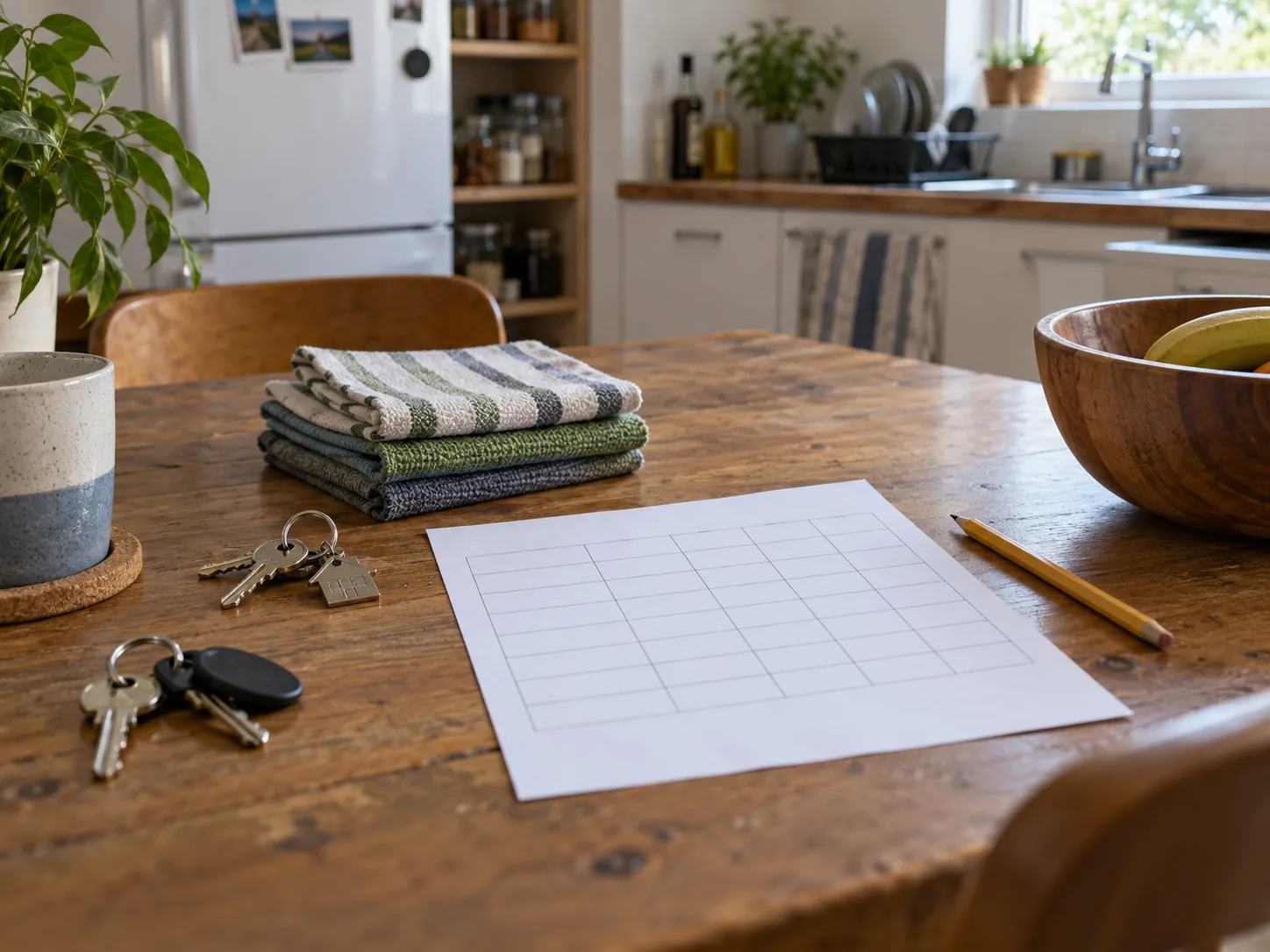
Write the rota in a place everyone can access. A shared note is enough. Include the date, task, owner and any material restriction. Avoid an elaborate scoring system that needs a meeting to maintain. When a resident cannot do their task, they should arrange a swap before the planned day, not leave a blank space that somebody else discovers afterwards.
Distinguish cleaning from repairs. Damp around a window, a leak under a sink or a damaged shower seal should be reported through the property’s normal maintenance route. Rubbing harder at a recurring mark may damage the finish and will not address the source. In a rented flat, keep a factual record of the issue and follow the tenancy’s reporting process rather than letting the rota turn a repair into an endless cleaning job.
Agree what a cleaner will and will not do
If the flat books outside help, nominate one contact for the booking and one written brief that all residents have seen. The contact can confirm access, arrival details and the agreed priorities; they should not have to improvise a different task list depending on who is at home. The brief should say which common rooms are included, what product restrictions apply and whether any bedrooms are in scope.
Tell the cleaner where bins go, whether a door should stay closed, and which work surfaces are cleared for cleaning. If a flatmate leaves a laptop and papers on the dining table, mark that area as untouched until the owner moves them. Do not ask the cleaner to work out whose belongings they are. A brief conversation before the first visit is easier than a disagreement about a moved item afterwards.
Budget discussions also need scope. A quote for common areas alone will differ from one that includes several bedrooms or accumulated build-up. Compare like with like, including appointment length and excluded jobs. The article on why two cleaning quotes for the same flat can differ explains the kinds of detail to put into an enquiry.
Review the first few visits
After two or three rounds, ask whether the plan is workable. Is the kitchen clear when the cleaner arrives? Does one person repeatedly do another’s task? Are the high-use areas receiving enough time? Change the list to address the observed problem. If the bathroom is always left until the end and rushed, make it the first priority. If a shelf rarely needs attention, move it to a slower rotation.
Keep the review about tasks, not character. “The bin was full on two collection days” is a solvable fact; “nobody cares” tends to become an argument. The same applies to cleaning quality: describe the surface and result you expected, check whether it was in the agreed scope, and revise the brief or time allowance if necessary.
A shared flat routine succeeds when residents know what to do as they use the space and the planned clean has clear boundaries. It should be short enough to follow, specific enough to settle ordinary questions, and flexible enough to survive a holiday, a new flatmate or a change in how the rooms are used.