Practical cleaning advice
Condensation or Dirty Glass? Reading the Windows in a London Flat
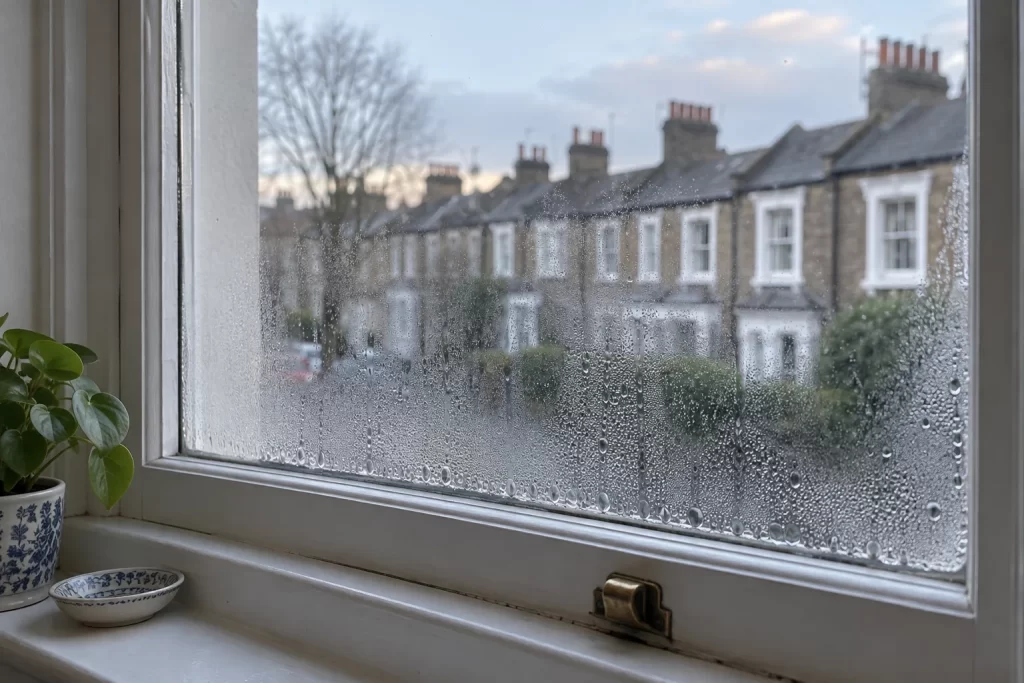
Before cleaning a cloudy window, work out where the cloudiness is. Moisture on the room-facing surface, condensation outside and mist within a sealed glazing unit can look similar from a distance. Only the first two are on surfaces you might be able to reach.
Begin with observation, not a stronger glass cleaner. Look at the window in daylight, note whether there are droplets and see whether the appearance changes later in the day. In an upper-floor flat, do all of this from a safe position indoors.
Start with the surface facing you
If moisture is visibly on ordinary, undamaged glass within easy reach, gently wipe a small area with a clean soft cloth suitable for that surface. If the droplets disappear where you wiped, you have located at least some moisture on the inside face.
That does not prove that the whole window is otherwise clear. There can also be exterior dirt or another mark behind it. Check the dry area from a couple of angles before deciding what remains.
Use the glazing maker’s care instructions for coated, filmed or decorative glass. For ordinary glass, Pilkington’s window FAQs recommend a clean cloth and a clear, non-abrasive cleaner.
When the moisture is indoors
Condensation forms when water vapour meets conditions that cause it to become liquid on a surface. The Glass and Glazing Federation explains the relationship between moisture, temperature and the glass surface. Cooking, bathing and washing are among the everyday activities that add water vapour indoors.
The timing is useful. Does the bedroom window look wet first thing in the morning? Does the kitchen pane cloud during cooking? Does the problem appear after a shower, then lessen? Record those patterns rather than simply describing the window as always dirty.
Use the available kitchen and bathroom extraction as intended, and keep ventilation controls accessible. If a control is unfamiliar or an extractor seems not to work, have that checked. Wiping the pane deals with water already there; it does not explain why it keeps returning.
Look at the surroundings as well. Is the sill wet, or just the glass? Are curtains pressed against the window? Are nearby surfaces affected? These observations help distinguish a small, intermittent issue from a recurring problem that deserves closer investigation.
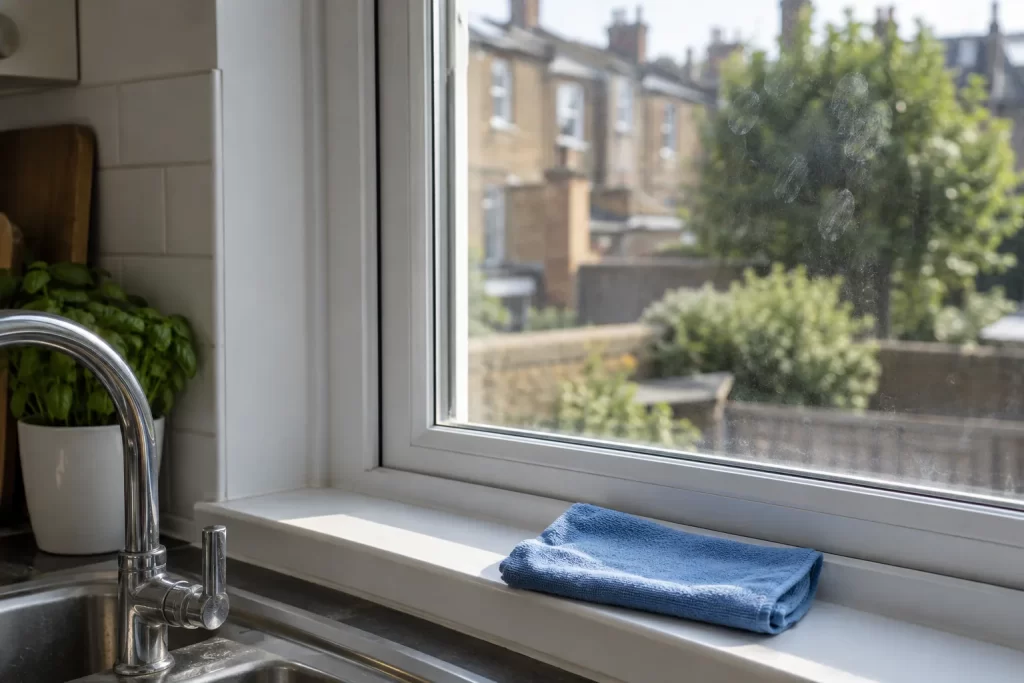
When the moisture seems to be outside
If the inside surface is clear but you can still see droplets beyond it, the moisture may be on the exterior face. Watch how it changes as the morning develops. Do not lean out to test it.
Pilkington describes external condensation on efficient glazing as a result of the outside glass becoming cold enough for moisture to form. It can affect neighbouring panes differently because their position, shelter and surroundings differ.
So a wet-looking outside pane does not automatically mean the window has failed or needs a more intensive clean. Note whether the moisture clears and whether a separate film or mark remains afterwards.
Where exterior dirt does need attention, access is its own decision. A sash opening, a narrow ledge or an openable pane is not an invitation to reach around the outside. Arrange appropriate access rather than stretching from inside the flat.
When the mist is between sealed panes
If the accessible surfaces are clear and the cloudiness appears within a sealed double- or triple-glazed unit, ordinary surface cleaning cannot reach it. Pilkington identifies failure of an insulating-glass edge seal as a usual cause of condensation between panes.
Send a photograph and the window details to the installer or a glazing repair specialist. They can establish what has happened and what work is appropriate.
Check what type of window you have before describing a sealed-unit failure. Secondary glazing, with a separate additional pane inside an existing window, is a different arrangement. The GGF’s condensation guide distinguishes those cavity conditions from a correctly functioning insulating-glass unit. If unsure, include a wider photograph showing the frames and openings.
After the droplets go, assess the remaining mark
A handprint, dried residue and a wet pane are separate observations. Once the glass is dry, you can judge whether accessible surface cleaning improves what remains. Use suitable care for the glass and frames, and avoid treating every stubborn mark as removable dirt.
Stop if the surface is damaged or the mark does not respond to appropriate ordinary cleaning. Record whether it stays in the same place and looks the same from different angles. This gives a cleaner or glazing specialist a clearer starting point than repeated applications of stronger products.
For accessible panes with ordinary surface dirt, window cleaning can address the agreed glass, frames and sills. Mention suspected internal mist or damaged finishes first so the job is not quoted as a surface clean that cannot solve the issue. Before an agreed visit, clear loose objects from the sill and make the working area accessible.
Make a useful record in a small flat
London flats can leave little flexibility about where people cook, dry laundry or sleep. Rather than assuming one generic ventilation instruction fits the property, record how the room is actually used and which ventilation options are available.
A short note should include the room, the time of day, where you think the moisture sits and whether it clears. Add any relevant extractor or window problem. If dampness persists, spreads to surrounding materials or repeatedly wets the frame, seek a building or glazing assessment; if you rent, share that record with the person managing the property.