
A small flat does not necessarily mean a small cleaning job. The kitchen may share a wall with the sitting area, the hallway may double as storage, and one bathroom may serve everyone. A useful weekly list accounts for how those spaces are used rather than treating every room as the same number of square metres.
Start with the jobs that keep the flat pleasant and usable this week: kitchen work surfaces and sink, bathroom fixtures, the most used floors, and the dust or crumbs on reachable furniture. Add an item only if you can say what the finished task looks like. “Clean the kitchen” is a room heading, not an instruction; “wipe the accessible worktop, hob surface and sink” is a workable list.
The aim is a repeatable routine. It should leave room for an unexpected spill, a busy week or a change in who is at home, without turning every visit into a deep clean.
Take stock of how the flat is actually used
Walk through the flat at the end of an ordinary week. Where do shoes bring in grit? Which worktop gets used every day? Does the spare room hold guests once a month or act as a full-time office? The answers tell you more than a generic room-by-room checklist.
Write down the surfaces that need regular attention, then mark the ones that are difficult to reach. A narrow passage beside a bed may be vacuumed every week, while the area beneath a heavy frame may need a separate arrangement. A desk covered with equipment may need its exposed edges cleaned, with cables and devices left alone.
Keep a separate note for tasks that depend on someone else moving belongings. If the dining table is also a work desk, the person using it can clear one half before it is wiped. The cleaner should not have to decide which papers may be moved or whether a laptop can be unplugged. The existing guide to preparing a cluttered room for a cleaner offers a practical way to make those boundaries clear.
Look for pressure points, not perfect coverage
In many small flats, the kitchen, bathroom and route from the front door show use first. Prioritise those places. A low-use guest shelf can wait longer than the frequently touched dining table. That is a choice about time, not a statement that the shelf never needs cleaning.
Notice whether a task has a consequence if postponed. Food residue on an active preparation surface should be dealt with promptly. A little dust on an undisturbed high shelf usually permits more flexibility. If a mark indicates damage, dampness or a leak, record it as a maintenance issue rather than adding “scrub harder” to the cleaning list.
Make a short weekly core
For an occupied flat, a weekly core might contain the following. Adjust it to the materials, household and time available; it is not a promise that every item fits into a fixed-length appointment.
| Area | A clear weekly task | What to clarify |
|---|---|---|
| Kitchen | Wipe accessible worktops, the ordinary hob surface and sink | Whether appliances or products must be moved, and which surfaces need special care |
| Bathroom | Clean the accessible basin, taps, toilet and shower or bath surfaces | What can be reached and whether a visible mark is build-up or damaged finish |
| Living space | Dust reachable furniture and remove ordinary crumbs | Which objects stay in place and whether upholstery receives routine care only |
| Bedroom | Dust accessible bedside surfaces and vacuum or clean the usable floor | Whether bedding changes are included and where used linen goes |
| Hall and floors | Remove loose debris and clean floor areas suitable for the finish | The approved method for wood, stone, vinyl or other flooring |
| Bins and touchpoints | Empty agreed bins and wipe suitable high-use handles or switches | Where waste goes and what products are safe for the fittings |
This list deliberately says “accessible”. It does not ask anyone to move a heavy wardrobe, reach outside a window or dismantle electronics as part of an ordinary visit. If those jobs matter, discuss them separately and agree a safe method.
The list also avoids prescribing one chemical for every surface. A product suited to a sealed worktop may be wrong for an unsealed material or a particular floor finish. Follow the maker’s instructions for the surface and the cleaner’s product directions. If you do not know the finish, identify it before choosing treatment.
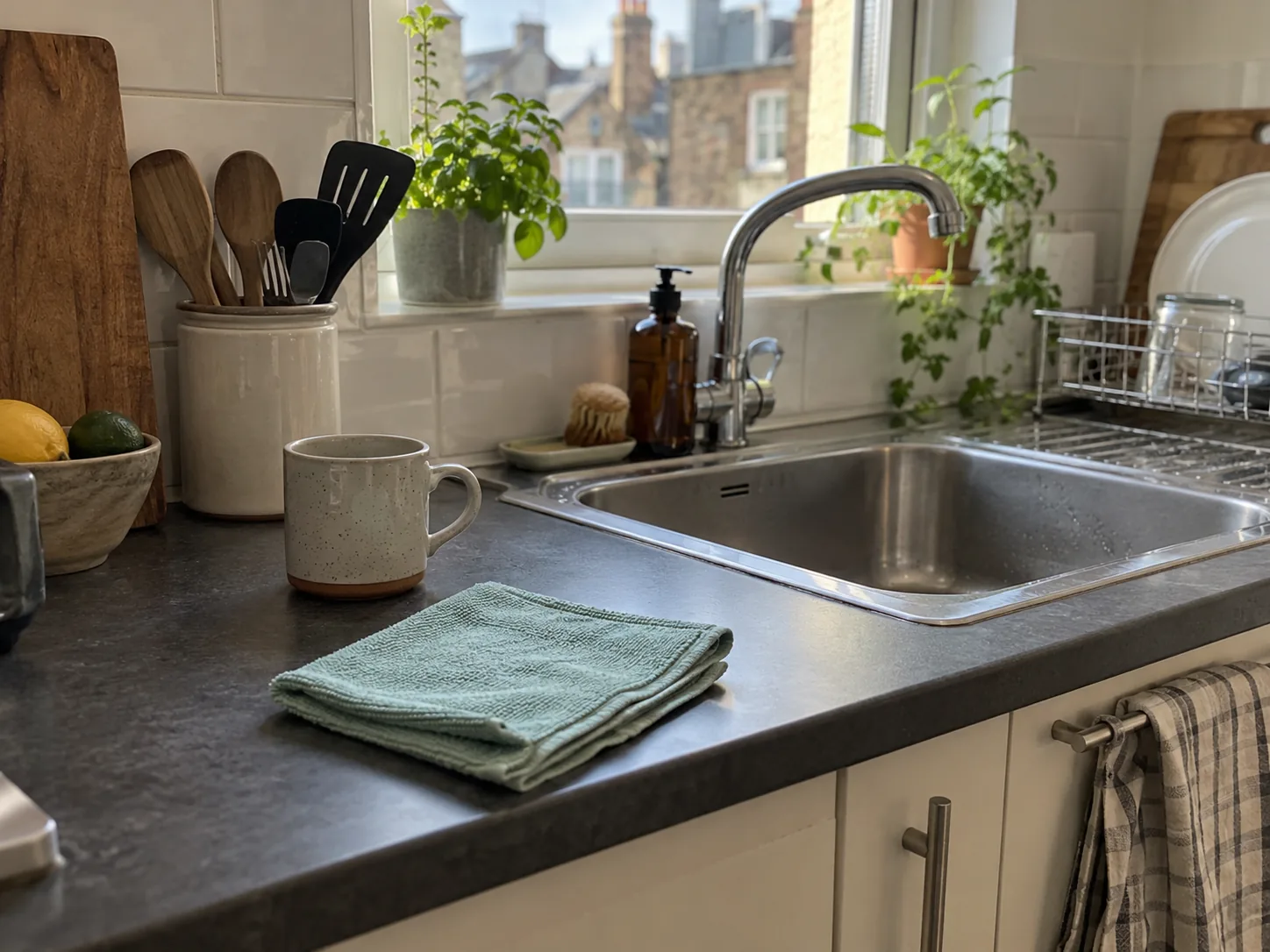
Give rotating jobs their own place
Once the weekly core is settled, choose one or two rotating tasks. This prevents a small but neglected job from turning into a large project, while keeping the main visit realistic.
Examples include accessible skirting in one room, the inside of an empty microwave, a reachable interior window ledge, or a set of cabinet fronts. Decide what “one room” or “one set” means. A line saying “all details” offers no useful boundary.
Do not add every rotating task each week. If this week’s extra is the cabinet fronts, next week’s could be accessible skirting. Record when each was last done, if that helps, but avoid a complicated tracking system that takes longer to manage than the cleaning itself.
Some work does not belong on the rotation at all. The inside of a heavily soiled oven, mineral deposits requiring assessment, or a carpet treatment may change the method, equipment or time. Ask whether a deep cleaning visit or another specialist service suits the actual condition. A regular appointment is easier to quote when exceptional work is described honestly rather than hidden in an expanding weekly list.
Set an order that protects the finished work
A list tells you what needs doing; an order prevents avoidable repetition. In a lived-in room, clear enough access, attend to suitable higher surfaces, then work down to the floor. The article on what order to clean a room in explains that sequence in more detail.
Across the flat, decide which room must remain usable. If somebody is working from home at the dining table, clean another area first and agree when the table can be cleared. In a one-bedroom flat, putting everything in the bedroom to clear the sitting room can simply block the next task. A small holding area and a short sequence of moves work better than a large pile relocated twice.
Plan damp floor work around the route to the door and bathroom. Leave a safe exit and allow the floor to be used again according to the product and flooring instructions. Do not assume that a quick pass means a surface is immediately ready for shoes, pets or furniture.
A simple visit brief
The useful version of a weekly list can fit on one page. For example:
Kitchen and bathroom first. Wipe the accessible kitchen worktop, hob surface and sink; clean the basin, toilet and shower surfaces; dust the sitting-room shelves and table; vacuum accessible floors and clean the hall floor with the product approved for it. Leave the work desk and the boxes beside it untouched. If time remains, wipe the reachable cabinet fronts. Put bin bags in the agreed outside container.
That brief states priorities, a boundary and a sensible optional task. It does not require the cleaner to guess what “thorough” means. If the flat’s condition changes, revise the brief before the visit rather than presenting an extra room at the door.
Keep daily habits separate from the booked clean
Some things cannot sensibly wait for a weekly appointment. Clear food spills when they happen, put away personal dishes and deal with a wet floor before it becomes a slipping risk. A booked cleaner can maintain an agreed routine, but the people using the flat still need a way to handle the ordinary mess between visits.
Make those daily habits small enough to repeat. A tray for post and keys may keep the dining table available; a shoe place near the entrance may reduce tracked grit. These changes are about access, not making the home look staged for a visit.
If several people share the flat, name who handles laundry, dishes and personal belongings. Do not place those tasks on the cleaning brief unless they are part of the agreed service. A weekly visit works best when its tasks can be completed without sorting private possessions or resolving household disagreements.
Review the list after two or three visits
After a few weeks, check what is consistently finished, what is regularly skipped and what nobody seems to use. If the bathroom takes longer than expected because of build-up, the answer may be a separate catch-up clean, a change in the routine or a longer appointment. Do not simply keep adding tasks to the same time allowance.
Ask which result matters most. Perhaps the floor is the priority because a toddler plays there, or the kitchen worktop because two people cook daily. Move time towards that result and remove a lower-value task if necessary. The best weekly list is a record of real choices, not a catalogue of every surface in the flat.
For a regular domestic cleaning arrangement, send the core list, any material restrictions and the rotating task you have chosen. Explain the flat’s access and the time available. That gives the team a useful starting point for confirming scope and price, and gives you a list you can recognise when the visit is complete.